
Wacky Rig vs Texas Rig for Bass Fishing
Table of Contents
- Wacky Rig vs Texas Rig for Bass Fishing: The Quick Answer
- Wacky Rig vs Texas Rig: Side-by-Side Comparison
- How to Rig a Soft Plastic Worm: Wacky Setup Step by Step
- Texas Rig for Bass Fishing: Setup, Hooksets, and Cover Work
- When to Use a Wacky Rig (and the Best Hook for Wacky Rig Setups)
- Hookup Rates, Missed Strikes, and Fish Care
- Troubleshooting: Snags, Durability, and Tough Conditions
- Conclusion: Pick by Cover, Depth, and Conditions
- Frequently Asked Questions
Last Updated: October 13, 2026
Wacky Rig vs Texas Rig for Bass Fishing: The Quick Answer
The wacky rig vs Texas rig question comes down to one thing: what the bait needs to do in the water. A wacky rig hooks a soft plastic through the middle so both ends fall and quiver on a slow, horizontal drop.
At Just Lures Fishing, we sell both setups. The honest answer is that neither rig wins everywhere. Pick the wacky rig for a slow, natural fall in open water. Pick the Texas rig for a weedless presentation in cover. Below, we break down how each rig works, how to tie both, and exactly when to switch.
Wacky Rig vs Texas Rig: Side-by-Side Comparison
The core difference is where the hook sits. A wacky rig runs the hook through the middle of the bait, leaving both ends free to move.
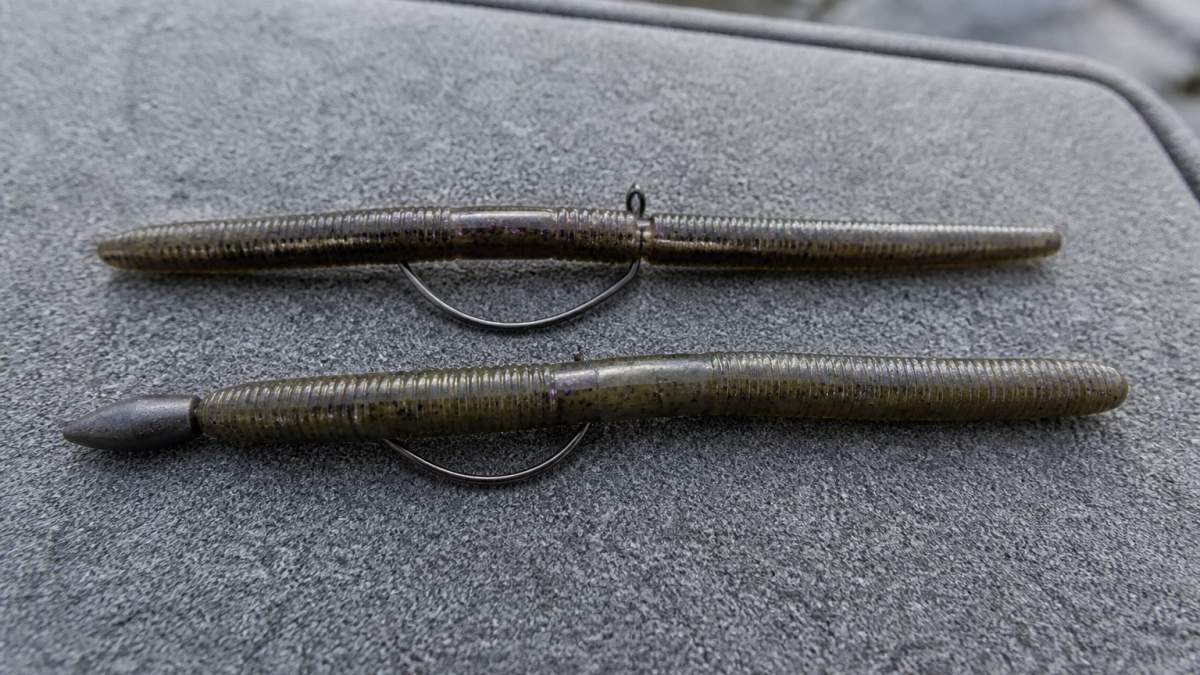
| Factor | Wacky Rig | Texas Rig |
|---|---|---|
| Hook placement | Through the middle of the bait | Through the nose, point buried |
| Weedless | No, exposed hook | Yes, fully weedless |
| Fall action | Slow, horizontal, quivering | Faster, head-first, compact |
| Best cover | Open water, sparse grass | Grass, brush, wood, current |
| Hookset | Reel down and sweep | Reel down and snap |
| Best hook | Wide gap or wacky hook (1/0 to 2/0 for 5-inch baits) | Extra wide gap (EWG) hook (3/0 to 5/0 for 6-inch baits) |
| Line recommendation | 8-12 lb fluorocarbon or braid with leader | 12-20 lb fluorocarbon or braid (30-50 lb for heavy cover) |
| Weight | Usually unweighted; Neko weight or nail weight for deeper water | Bullet weight (1/8-1/2 oz) and bead; weightless for shallow |
| Rod power | Medium-light to medium spinning | Medium-heavy to heavy casting |
| Best season | Post-spawn, summer, clear water | Pre-spawn, fall, dirty water, heavy cover |
The table tells the story fast. The wacky rig trades weedlessness for action. The Texas rig trades action for the ability to fish anywhere. But the real decision comes down to three variables: cover, depth, and water clarity.

Decision Matrix: Which Rig to Tie
| Situation | Wacky Rig | Texas Rig | Why |
|---|---|---|---|
| Open water, clear, pressured fish | ✅ | ❌ | Slow horizontal fall triggers strikes |
| Dense grass or matted vegetation | ❌ | ✅ | Weedless hook slides through |
| Brush piles or wood | ❌ | ✅ | Buried point avoids snags |
| Shallow ponds, sparse grass | ✅ | ✅ | Both work; wacky for clear, Texas for stained |
| Deep water (10+ ft) | ⚠️ (add nail weight) | ✅ | Texas rig with heavier weight gets down faster |
| Current | ❌ | ✅ | Texas rig tracks straighter and stays weedless |
| Cold front, high pressure | ✅ | ⚠️ | Wacky's slow fall is hard to beat |
| Dirty water, low visibility | ❌ | ✅ | Texas rig with rattle or dark color |
This matrix is the fastest way to choose. If you are still unsure, start with a Texas rig in cover and a wacky rig in open water. Adjust from there based on fish response.
How to Rig a Soft Plastic Worm: Wacky Setup Step by Step
Rigging a wacky worm takes about 30 seconds. The goal is a bait that falls flat and level, with both ends free to quiver. But the details matter: hook size, line type, and whether you add weight all change how the bait falls and how bass eat it.
Tackle You Need
- Bait: 5- to 6-inch stick bait (Senko-style). The Money Worm in Green Pumpkin is a proven choice.
- Hook: Wide gap or dedicated wacky hook, size 1/0 to 2/0 for 5-inch baits, 2/0 to 3/0 for 6-inch baits. A wide gap hook works well.
- Line: 8-12 lb fluorocarbon for clear water, or 10-15 lb braid with a fluorocarbon leader for added sensitivity. Lighter line lets the bait fall more naturally.
- Rod: Medium-light to medium spinning rod, 6'6" to 7'0". A softer tip helps you cast the weightless bait and detect subtle ticks.
- Reel: 2500 to 3000 size spinning reel with a smooth drag.
- Optional weight: For deeper water or wind, add a small nail weight (1/32 to 1/16 oz) inserted into the head of the bait, or use a Neko weight. This speeds the fall without killing the action.
Step-by-Step Rigging
- Start with your stick bait. Find the exact middle.
- Run a wide gap hook through the center, point up. The hook should exit the same side it entered.
- Slide the bait up to the hook bend so it sits centered. The hook point should be exposed and clear of the plastic.
- Add an O-ring if you want the bait to last longer. Slide the O-ring over the middle, then hook through the O-ring instead of the plastic. This prevents tearing and keeps the hook centered.
- If adding weight, insert a nail weight into the head of the bait before rigging. This makes the bait fall head-first, which is useful in deeper water.
- Cast, let it fall on a semi-slack line, and watch for the line to jump.
That slow fall is the whole point. A wacky-rigged stick bait sinks horizontally, both ends quivering, and bass hit it on the drop more often than on the retrieve. Keep your line semi-slack so the bait falls naturally, but tight enough to feel a tick.

Hookset and Retrieval
When a bass eats a wacky rig, you will often see the line jump or feel a soft tick. Do not set the hook immediately. Reel down until you feel weight, then sweep the rod to the side. A sweeping hookset drives the wide gap hook into the corner of the mouth, which is where most wacky rig bites connect.
Retrieve the bait with short twitches and pauses. Let it fall again. Most strikes come on the initial fall or just after a twitch.
Texas Rig for Bass Fishing: Setup, Hooksets, and Cover Work
The Texas rig is the workhorse for fishing heavy cover. You thread the hook point through the nose, slide it up, rotate it, and bury the point back into the plastic so nothing catches on grass, brush, or wood.
- Slide a bullet weight onto your line, then a bead.
- Tie on an EWG hook.
- Run the hook point into the nose of the bait and out the top.
- Slide the bait up over the hook eye.
- Rotate the bait and bury the hook point back into the plastic, just under the surface.
- Rig it straight, with no kinks, so it tracks through cover.
The hookset is different from a wacky rig. Reel down until you feel weight, then snap the rod up hard to drive the point through the plastic and into the fish. For creature baits in thick grass, try the Brush Hawg, which is built to be pitched into dense cover and rigged Texas style.
When to Use a Wacky Rig (and the Best Hook for Wacky Rig Setups)
Use a wacky rig when the fish are pressured, the water is clear, or the bass are suspended and want a slow fall. It shines in open water, around sparse grass, and in shallow ponds where a slow, natural drop triggers reaction strikes.
Money 6"- Black / Blue Laminate →
The best hook for wacky rig setups is a wide gap hook or a dedicated wacky hook. A wide gap gives the bait room to sit centered and lets the point clear the plastic on the hookset.
Hookup Rates, Missed Strikes, and Fish Care
Hookup rates favor the Texas rig in heavy cover and the wacky rig in open water. The exposed hook on a wacky rig penetrates fast, but it also snags more and can pull free if you set too early.
A common mistake is setting the hook the moment you feel a tick. On a wacky rig, wait until the line loads up and the fish is moving.
Fish care matters too. If you are releasing bass, wet your hands, support the belly, and keep the fish out of the water only as long as it takes to unhook it.
Troubleshooting: Snags, Durability, and Tough Conditions
Snags and torn baits are the two problems that cost anglers the most fish and the most money. The fixes are simple once you know them.
- Snagging on a wacky rig: switch to a weedless wacky hook or move to a Texas rig in cover.
- Bait tearing off the hook: use an O-ring, or switch to a bait with a solid head like the Craw Tube, which holds up better on repeated casts.
- Fish short-striking: downsize the bait or slow the fall.
- Bait not falling level: re-center the hook in the middle of the bait.
Tough conditions, cold fronts, high pressure, and clear water, usually favor the wacky rig's slow fall. Dirty water and heavy cover favor the Texas rig's weedless profile.
Conclusion: Pick by Cover, Depth, and Conditions
The wacky rig vs Texas rig decision is not about which is better. It is about which fits the water in front of you. Open water and a slow fall call for the wacky rig. Grass, brush, and wood call for the Texas rig.
If you want to fish both without guesswork, start with baits that rig either way. Our Money Worm rigs wacky or Texas, and our EWG hooks give you the wide gap both setups need. Shop our soft plastics and hooks, and you will have everything you need to fish whatever cover you find.

Frequently Asked Questions
When should you use a wacky rig instead of a Texas rig?
Use a wacky rig in clear water, shallow flats, and post-spawn or high-pressure situations where bass have seen everything. The exposed hook and horizontal fall give a slow, natural presentation that triggers pressured fish. Switch to a Texas rig in heavy cover, grass, brush, or current, where the weedless hook placement keeps you from snagging. Match the rig to the conditions in front of you, not to a universal winner.
Is a wacky rig better than a Texas rig for bass?
Neither rig wins everywhere. The wacky rig shines in open water and shallow, clear conditions, and it skips easily under docks. The Texas rig for bass fishing handles vegetation, brush, and current that would snag an exposed hook. Anglers comparing the two often note the wacky rig gets more bites in pressured water while the Texas rig lands fish in cover. Carry both and let the water decide.
What is the best hook for a wacky rig?
A wide-gap hook with a sharp point, like the Whack Em Attack EWG Hooks, works well for wacky setups. The wide gap clears the bulk of a stick bait and drives the point home on the hookset. Pair it with a 6-inch finesse worm such as the Money Worm for a natural, horizontal fall. Carry a few sizes so you can match the bait's thickness.
Can you fish a wacky rig around weeds?
Yes, but with care. A wacky rig's exposed hook snags grass and brush more easily than a Texas rig, so fish it along weed edges, over submerged grass, or in sparse cover rather than punching through mats. If you need to fish inside heavy cover, switch to a Texas rig or a weightless Texas-rigged bait. Some anglers also run a weighted wacky setup to control the fall rate in wind or current.
How do you rig a soft plastic worm Texas style?
Thread the hook point into the nose of the worm, slide it up about a quarter inch, then rotate the hook and bring the point back through the body so it sits straight. Push the point slightly into the plastic to make it weedless, then slide a bullet weight above the hook if you need to punch grass or feel the bottom. The Money Worm and Craw Tube both rig cleanly this way for Texas and Carolina setups.