
Top 5 Soft Plastic Retrieve Techniques for Bass
Last Updated: October 23, 2026
Quick Summary
The top 5 soft plastic retrieve techniques are the slow roll, hop and pause, twitch and walk the dog, the suspended soft plastic jerkbait twitch, and the swimbait retrieve matched to forage. A soft plastic retrieve matters more than bait choice because the retrieve triggers the strike, so match cadence and speed to water temperature and conditions.
- The slow roll is a continuous, steady crank with no pauses, best in cold water and on pressured fish.
- On hop and pause, the fall triggers strikes, so never reel during the drop.
- In cold water below 50°F, use one lift every 4-6 seconds with long pauses.
- A high-speed reel of 7.1:1 or faster suits twitch-and-walk and burning a swimbait.
- Match the tail to water clarity: vibration for stained water, realism for clear water.
Table of Contents
- Why Your Soft Plastic Retrieve Matters More Than the Bait
- 1. The Slow Roll: Steady, Deep, and Deadly
- 2. Hop and Pause: The Bottom-Contact Standard
- 3. Twitch and Walk the Dog: Finesse Meets Aggression
- Soft Plastic Jerkbait Retrieve: Suspended Twitch and Slack Line Control
- Soft Plastic Swimbait Retrieve: Matching Forage and Tail Action
- Soft Plastic Retrieve Speed: Cadence, Depth Control, and Current
- How to Rig Soft Plastics for Beginners: Jighead Weight and Weedless Setups
- Frequently Asked Questions
Why Your Soft Plastic Retrieve Matters More Than the Bait
Most anglers obsess over which bait to tie on. The real difference maker is what you do after the cast lands. A soft plastic retrieve is the sequence of movements, pauses, and speed changes you apply to a bait, and it decides whether a bass commits or follows and turns away.
The bait gets attention. The retrieve triggers the strike. That distinction shapes everything below, where we break down the top 5 soft plastic retrieve techniques, the speed and depth control behind each, and how to rig for them. We'll also cover what most guides skip: why strikes get missed and how to fix your rhythm.
1. The Slow Roll: Steady, Deep, and Deadly
The slow roll is a continuous, steady crank with no pauses. You cast, let the bait sink to the target depth, then reel at a pace just fast enough to keep the tail thumping. Speed stays constant, rod tip low, and the bait tracks in a straight line.
This retrieve shines in cold water and on pressured fish. Bass that won't chase a fast bait will often eat a slow-rolled swimbait out of irritation. The mistake most anglers make is reeling too fast. If you can't feel the tail working, you're going too quick.
Our pick for this technique is the Ripple Shad 4, whose ribbed body and paddle tail create vibration even at crawl speed. Pair it with the Swim Shad 5" when you want a wider wobble.

2. Hop and Pause: The Bottom-Contact Standard
Hop and pause is the workhorse retrieve for soft plastics, and it works because it keeps the bait in the strike zone longer. Lift the rod tip sharply to pop the bait off the bottom, then let it fall on a slack line. The fall triggers strikes, not the hop.
The variation matters. A standard hop and pause uses one sharp lift followed by a two-to-three second drop. A double or triple hop covers more water and imitates a fleeing crawfish. On a Texas rig, this is the retrieve that keeps the bait weedless while still contacting bottom.
The Crawler is built for this: aggressive ridges, a tapered body, and a bulbous tail that pushes water on every lift. For a finesse version, drop to the Money 6" on a shaky head.
3. Twitch and Walk the Dog: Finesse Meets Aggression
Walking the dog with a soft plastic means imparting a side-to-side glide using rod tip snaps and controlled slack. It's a surface and shallow-water technique, and it demands rhythm more than power. Snap, reel up the slack, snap again.
The cadence is the whole game. A fast twitch-and-walk triggers reaction strikes from active fish. A slower, wider walk pulls fish up from deeper water. If bass are swiping and missing, shorten your snaps and add a half-second pause between them.
For this, we reach for the Single Tail Grub rigged weightless, or the Ring Worm 4" when we want that curly tail kicking on the pause.

Soft Plastic Jerkbait Retrieve: Suspended Twitch and Slack Line Control
The soft plastic jerkbait retrieve is a suspended twitch: sharp rod snaps that make the bait dart and glide, followed by controlled slack that lets it fall horizontally. The bait should hang in the water column, not sink nose-down.
Slack line control separates good anglers from great ones here. Too much slack and you lose contact and miss the strike. Too little and the bait won't dart properly. The fix is to snap, then guide the line back onto the reel spool with your index finger rather than cranking hard.
Fish this over submerged grass and around docks. The Swim Minnow rigged on a belly hook gives you that darting, suspended action with a hard-thumping tail on the glide.

Soft Plastic Swimbait Retrieve: Matching Forage and Tail Action
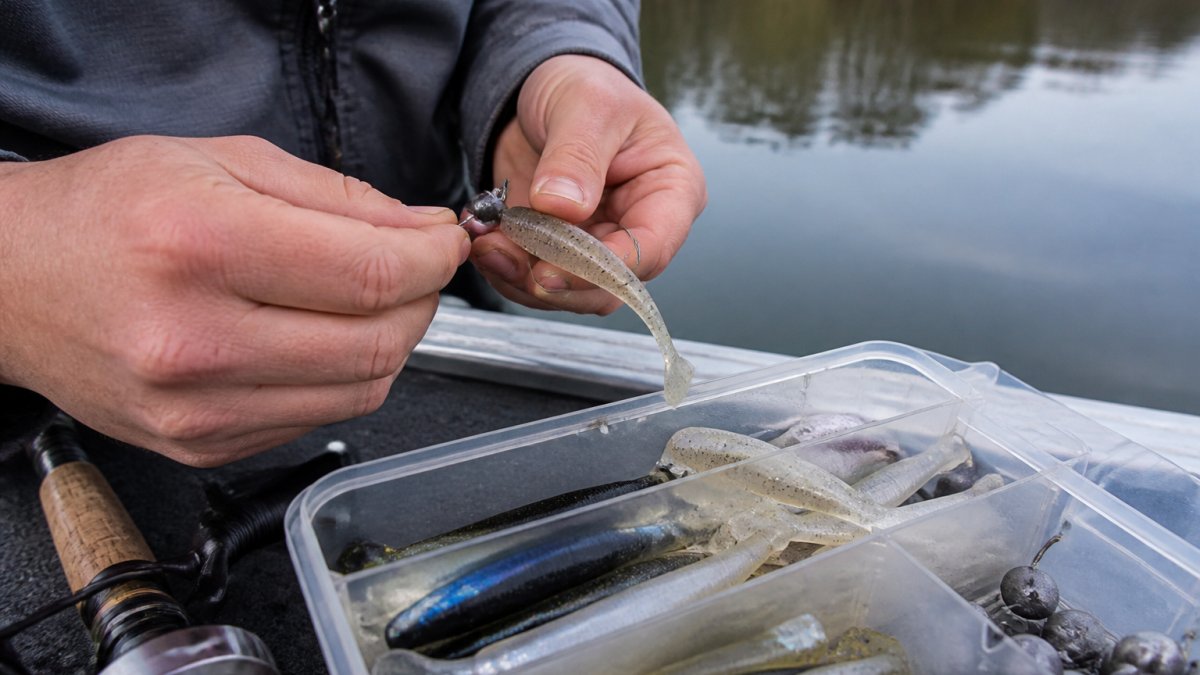
A swimbait retrieve should match the forage in your water. If bass are keyed on shad, you want a tight wobble and a steady retrieve. If they're eating bluegill, a wider, slower tail action with occasional direction changes works better.
Tail action is the tell. A paddle tail thumps and displaces water; a curly tail ripples. Match the tail to the clarity. Stained water rewards vibration, so lean on ribbed bodies and wider tails. Clear water rewards realism, so slow down and let the bait glide.
The Swim Shad 5" covers both freshwater and saltwater, and the Ripple Shad 4 brings 3D eyes and a scent-infused body for wary fish.
Soft Plastic Retrieve Speed: Cadence, Depth Control, and Current
Retrieve speed is the variable most anglers never consciously adjust. Cadence, the rhythm of your pauses and lifts, matters more than raw reel speed. A slow retrieve with sharp pauses out-fishes a fast retrieve with no rhythm almost every time. But what does "rhythm" actually mean in practice? It means counting beats between movements, just like a musician.
Here is a concrete way to think about cadence based on water temperature. In cold water (below 50°F), use a slow, deliberate rhythm: one lift every 4-6 seconds, with long pauses on the fall. In cool water (50-65°F), tighten to one lift every 2-3 seconds. In warm water (above 65°F), active fish often want a faster, more erratic cadence, one lift every 1-2 seconds, with occasional double hops.
Depth control follows from speed and jighead weight. Heavier heads sink faster and hold bottom in current. Lighter heads fall slower and stay in the upper column. In current, cast upstream and let the bait swing down naturally rather than fighting the flow. The key is to match your jighead weight to the depth and current you are fishing, not to your personal preference.
| Condition | Retrieve Speed | Cadence | Jighead Weight |
|---|---|---|---|
| Cold water, lethargic fish | Slow | Long pauses, 3-5 seconds | Light, 1/8 oz |
| Active fish, warm water | Medium to fast | Short pauses, 1-2 seconds | Medium, 1/4 oz |
| Stained water, low clarity | Slow to medium | Steady contact, minimal pause | Heavier, 3/8 oz |
| Current, river or inlet | Slow against flow | Let current set the rhythm | Heaviest that holds bottom |
For finesse depth control, the Tungsten Ned Jig is hard to beat. Its 97% tungsten construction is denser than lead, so it stays compact while getting down fast, and the wire bait keeper holds your plastic in place.
How to Rig Soft Plastics for Beginners: Jighead Weight and Weedless Setups
Rigging is where beginners lose the most fish. The two setups worth learning first are the jighead and the Texas rig. A jighead is simple: thread the bait on, check it runs straight, and cast. A Texas rig is weedless: run the hook through the nose, out the top, and skin it back into the plastic so the point stays protected.
Jighead weight should match depth and wind. Start light and go heavier only when you can't feel bottom. For a weedless setup, the Brush Hawg 6" and Craw Tube 4" both rig cleanly on a Texas or Carolina setup and hold up around cover. When rigging a Texas rig, pay attention to the hook point: it should sit just barely skinned into the plastic, so it is weedless but still exposed enough to drive home on the hookset.
Equipment-specific retrieve adjustments are where rigging and retrieve meet. Your rod action and gear ratio fundamentally change how a retrieve feels and performs. A fast-action rod transmits more vibration, making it easier to feel subtle ticks on a slow roll, but it can also rip the bait away from fish on a hop-and-pause. A moderate-action rod loads deeper and is more forgiving on treble-hooked baits, but it may dull the snap of a twitch-and-walk. For gear ratio, a high-speed reel (7.1:1 or faster) is ideal for twitch-and-walk and burning a swimbait, because it picks up slack quickly.
The top 5 soft plastic retrieve techniques only pay off when the bait runs true and the cadence is repeatable. Start with the slow roll and hop and pause, master the rhythm, then add the twitch and suspended presentations. That progression is how weekend anglers close the gap on the fish they've been missing.
Frequently Asked Questions
What are the best ways to retrieve soft plastic lures?
The five core retrieves are the slow roll, hop and pause, twitch and walk the dog, suspended twitch for jerkbaits, and a steady swimbait retrieve. Match the technique to depth, cover, and forage. Bottom contact suits hop and pause, while the slow roll covers open water. Adjust soft plastic retrieve speed until you find the strike zone, then repeat that cadence.
How fast should you retrieve a soft plastic lure?
Start slow. A slow roll keeps a swimbait tracking straight at a crawl, while a hop and pause uses two or three quick reel turns before letting the bait fall on a slack line. In cold water or heavy pressure, slow down further. In current, speed up just enough to keep bottom contact. Let the fish tell you: if they swipe short, change your soft plastic retrieve speed before changing baits.
When should you use a twitch-and-pause retrieve?
Use a twitch-and-pause when bass are suspended or chasing baitfish near the surface. Twitch the rod tip two or three times, then let the bait sit on a slack line. That pause is when most strikes happen. It works well with a soft plastic jerkbait or a fluke-style bait rigged weedless, especially in clear water where fish get a good look at the presentation.
How do you fish a soft plastic swimbait?
Rig a paddle-tail swimbait on a jighead or swimbait hook and cast past your target. Count it down to the depth you want, then reel slowly enough that the tail thumps without the bait rolling. Keep the rod tip low and steady. For suspended fish, try a soft plastic swimbait retrieve with a lift-and-drop cadence. The Ripple Shad 4 or Swim Minnow are good starting points.
How do you rig soft plastics for beginners?
Start with a Texas rig: thread a 3/0 to 5/0 hook through the nose, out the top, and back into the body so the point sits weedless. Use a 1/8 to 1/4 oz bullet weight for bottom contact. For swimbaits, a jighead with a wire keeper keeps the bait straight. Match hook size to bait length, and check that the bait runs straight before you cast.
The hard part isn't learning five retrieves. It's committing to one long enough to feel what the bait is doing. Just Lures Fishing stocks the Whack Em Lures lineup we fish ourselves, from the Ripple Shad and Swim Minnow to creature baits built to trigger big bass. Browse the swimbait collection and give yourself the best chance of success on every cast.
