
Lure Selection for Effective Bass Fishing: A 2026 Guide
Table of Contents
- Why Lure Selection Matters More Than Angler Experience
- Hard vs. Soft Plastic Lures for Beginners
- How to Choose Lure Color for Water Clarity
- Matching Lure Depth to Structure and Bottom Contact
- Best Artificial Baits for Bass Fishing Success
- Building Your Confidence Lure Strategy
- Troubleshooting Lure Failure and Seasonal Transitions
- Frequently Asked Questions
Last Updated: October 2, 2026
Why Lure Selection Matters More Than Angler Experience
Your skill as an angler matters less than you think. According to ScienceDirect research on fishing success factors, the specific choice of lure outweighs angler experience in determining whether you catch fish. This finding flips conventional wisdom on its head: experience helps, but it's not the deciding factor.
Here's what that means for your tackle box. A beginner with the right lure in the right water condition will outfish a veteran holding the wrong one. At Just Lures Fishing, we've built our entire approach around this principle. We focus on helping you select the perfect lure so you succeed on the water, regardless of how many seasons you've been fishing. The research is clear: 17 academic citations documented the impact of lure characteristics on fishing outcomes, far more citations than studies on angler skill alone.
Hard vs. Soft Plastic Lures for Beginners
The choice between hard and soft plastics depends on your skill level. Beginners and advanced anglers should approach this decision differently.
For Beginners (0-50 hours on water):
Hard lures can be a great starting point for beginners. A crankbait wobbles on its own; a topwater bait creates disturbance without technique. Your first 50 hours can focus on learning where fish are and when they bite, not mastering rod control.
A crankbait's built-in action can compensate for imperfect retrieves and timing mistakes.
Hard Lures for Beginners:
- Built-in vibration and action (no rod work required)
- Faster learning curve, cast, retrieve, feel the strike
- Better for covering water quickly and finding active fish
- Forgiving of poor technique
- Ideal for understanding how lure depth and color affect strikes
The Whack Em Square Bill Crankbait ($7.00) is a high-performance shallow-diving lure. Its square bill deflects off structure, reducing snags while its wide wobble attracts fish from distance. Internal rattles call fish in, and ultra-sharp hooks ensure solid hooksets.
For Intermediate Anglers (50-200 hours):
Soft plastics become valuable once you understand lure action and depth control. They demand active rod work, you control fall speed, pause duration, and retrieve cadence. This precision is essential for targeting pressured fish or specific structure.
Soft Plastics for Intermediate Anglers:
- Require active rod work and timing (but you now have the foundation)
- More versatile presentations: dragging, hopping, shaking, slow-rolling
- Better for finesse situations and pressured water
- Allow you to adapt presentation speed to water temperature and fish mood
- Develop muscle memory and feel
For Advanced Anglers (200+ hours):
Advanced anglers use both strategically. Hard lures cover water quickly and find active fish. Soft plastics convert bites and fish pressured water. The decision is based on what the situation demands, including hybrid options like swimbait-style hard lures.
The Progression:
- Beginner (0-50 hours): Hard lures only. Build confidence and learn fish behavior.
- Intermediate (50-200 hours): Hard lures for covering water, soft plastics for precision. Start mixing presentations.
- Advanced (200+ hours): Both, plus hybrids. Choose based on water clarity, pressure level, and seasonal conditions.
Frequency matters more than variety.
How to Choose Lure Color for Water Clarity
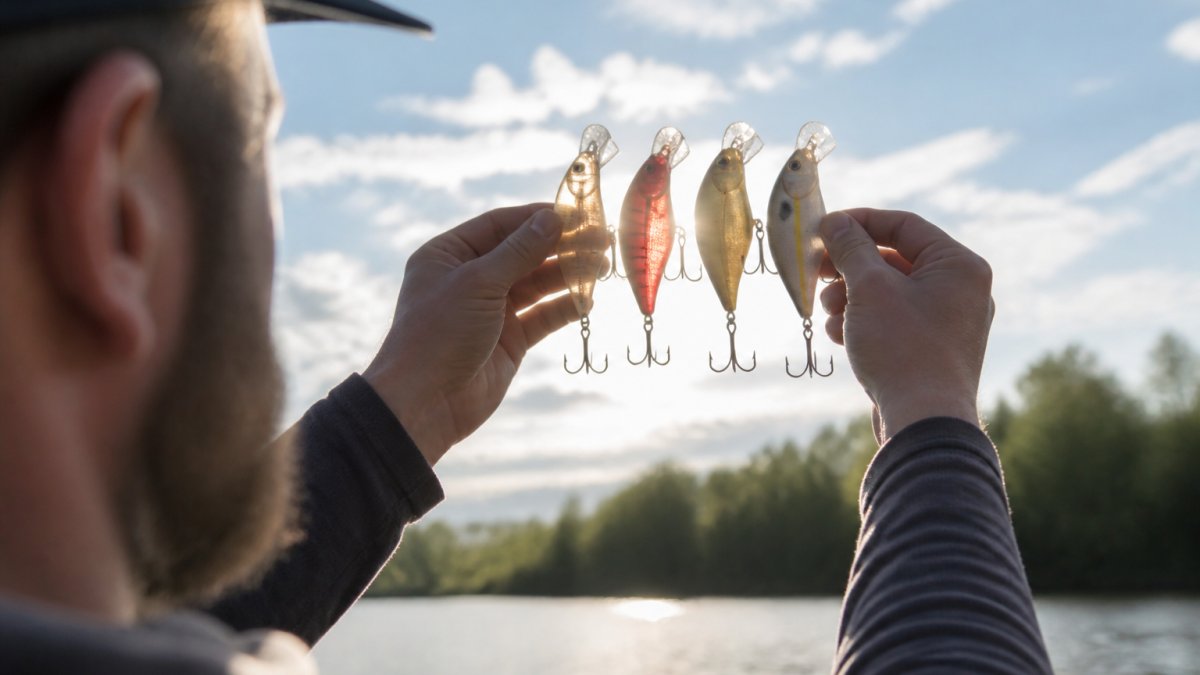
Water clarity is the primary factor in lure selection bass fishing, dictating color more than any other consideration. The clearer the water, the more subtle your lure color should be. In murky water, go bold.
Clear Water (visibility 6+ feet):
- Natural colors: silver, white, shad patterns
- Realistic finishes matter
- Fish can inspect your lure closely
- Avoid bright, unnatural hues
Stained Water (visibility 2-6 feet):
- Transitional colors: chartreuse, pearl, natural with flash
- Balance visibility with realism
- Fish rely more on vibration than sight
- Add internal rattles for attraction
Murky Water (visibility under 2 feet):
- High-visibility colors: bright chartreuse, black, white
- Maximum contrast is your goal
- Fish hunt by vibration and lateral line detection
- Color matters less than drawing power
The Whack Em Mid-Depth Crankbait ($4.50) comes in multiple color options matched to water conditions. Its 3D eyes and realistic finishes work in clear water, while its aggressive thump and rattle call fish in stained conditions. The chubby, rounded profile creates that signature vibration that triggers strikes regardless of visibility.

Matching Lure Depth to Structure and Bottom Contact
Bass hold near submerged timber, rocks, weed lines, and drop-offs. Your lure must reach that depth to trigger strikes. Shallow-running lures (0-5 feet) work banks and flats. Mid-depth runners (6-12 feet) target transition zones. Deep divers (12+ feet) reach bass in summer heat or winter cold.
The Whack Em Square Bill ($7.00) dives 0-5 feet and excels in shallow structure. The Mid-Depth Crankbait reaches 6-12 feet. The Deep Diving 125 ($7.00) reaches 20+ feet with an adjustable triple-tie bill for customized vibration.

Depth Matching Guide:
| Water Depth | Lure Type | Best For | Example |
|---|---|---|---|
| 0-5 feet | Shallow runners | Banks, flats, visible structure | Square Bill Shad |
| 6-12 feet | Mid-depth cranks | Transition zones, suspended fish | Mid-Depth Crankbait |
| 12+ feet | Deep divers | Summer heat, winter cold, deep structure | Deep Diving 125 |
The adjustable triple-tie bill on Whack Em deep divers offers three presentations: front tie for tight vibration and quick descent, middle tie for balanced action, back tie for aggressive wobble in cold or murky water.
Best Artificial Baits for Bass Fishing Success
The best artificial baits combine the right profile, vibration, and drawing power. Crankbaits dominate because they work immediately.
The Crank 8 ($4.00) dives to 8 feet with rapid diving action and 3D holographic eyes. The rounder belly creates different vibration, and the rattling action calls fish in.

The Mid-Depth Crankbait ($4.50) triggers strikes in mid-depth zones. Its chubby profile creates aggressive thump, the rattle chamber attracts from distance, and 3D eyes fool wary predators.
The Deep Diving Crankbait ($5.00 for 0-18' or $7.00 for 12+) reaches deep structure. The 4.92-inch profile displaces water and creates vibration that predatory fish can't ignore. Internal rattles and sticky-sharp hooks ensure hooksets.
The Square Bill Shad ($7.00) is your structure weapon. Its square bill deflects off timber and rocks, reducing snags. The erratic wobble mimics distressed baitfish that trigger aggressive pursuit.
Wired2fish's August 2026 regional lure report documented which specific lure profiles succeed in different seasonal conditions. The pattern is consistent: lures matched to water clarity and depth outperform everything else.
Building Your Confidence Lure Strategy
Confidence lures are about simplification. Frequency matters, confidence can come from repetition.
Select your confidence lure based on your primary fishing conditions.
Building Your Confidence Lure System:
- Identify your primary depth zone, where do you fish most often?
- Select a hard lure for that zone, something with built-in action
- Fish it until you understand its behavior, 20+ hours minimum
- Add one secondary lure, for when conditions shift
- Stick with this system for a full season, resist the urge to rotate constantly
Troubleshooting Lure Failure and Seasonal Transitions
Your lure stops producing. Before you switch, use a diagnostic system to identify the real problem instead of rotating lures randomly.
The Lure Failure Diagnostic Tree:
Step 1: Are you getting strikes at all?
Step 2: Are you getting strikes but missing fish?
Spring (water 50-65°F): Transition from deep to shallow
Summer (water 65-80°F): Deep water and structure
Fall (water 60-70°F): Aggressive feeding before winter
Winter (water 40-50°F): Deep, slow presentations
Frequently Asked Questions
How do I choose the right lure selection for different water conditions?
Lure selection depends on three factors: water clarity, depth, and target species activity level. In clear water, use natural colors and smaller profiles; in murky water, choose bright colors and lures with vibration to increase visibility. Match your lure's diving depth to where bass are holding, shallow runners (0-5 feet) for structure near the surface, mid-depth crankbaits (6-12 feet) for transitional zones, and deep divers (18+ feet) for offshore structure.
What's the difference between hard and soft plastic lures for beginners?
Hard lures like crankbaits offer built-in vibration and rattling action, making them easier for beginners to fish effectively with simple retrieve speeds. Soft plastics require more finesse to impart action but offer versatility in presentations. Hard baits are ideal for covering water quickly and triggering aggressive pursuit from predatory fish. For beginners, hard crankbaits provide immediate feedback and consistent action, helping build confidence faster than soft plastics.
How does lure color affect fishing success in different water clarity levels?
Light penetration dictates lure visibility and effectiveness. In clear water with good light penetration, natural colors mimicking baitfish work best, silvers, greens, and realistic patterns. In stained or murky water, bright colors (chartreuse, orange, white) and lures with high vibration cut through reduced visibility and draw strikes from bass that rely on lateral line detection.
Why is lure confidence important for consistent bass fishing results?
High-frequency casting with a lure you trust builds muscle memory and allows you to detect subtle strikes. Confidence in your lure can translate to better presentation, faster reaction times, and ultimately more consistent catches. This strategy simplifies decision-making on the water and lets you focus on reading structure and adjusting retrieve speed.
Are premium artificial baits worth the extra cost compared to budget options?
Premium baits like Whack Em Lures are engineered with precision-weighted designs, sharp hooks, and realistic 3D eyes that trigger more strikes than budget alternatives. The difference lies in durability, hook quality, and action consistency. Weekend warriors with limited time on the water benefit most from premium tackle, fewer lost lures to structure, more reliable hooksets, and better performance in challenging conditions. You're paying for proven design and construction that delivers results when your fishing time is limited.