
Is Soft Plastic Creature Bait Worth It for Fall Fishing?
Table of Contents
- The Verdict: Is Soft Plastic Creature Bait Worth It for Fall Fishing?
- Where Creature Baits Win in Fall
- Where They Fall Short
- Fall Bass Behavior and Why Bait Choice Changes
- How to Rig a Creature Bait for Fall Presentations
- Creature Bait vs Stick Bait: Which Fall Bait Wins?
- When to Use Creature Baits Instead of Other Fall Lures
- Creature Bait Colors for Bass in Fall Water Conditions
- Cost, Durability, and Value Per Fish
- Conclusion: Making the Call for Your Water
- Frequently Asked Questions
Last Updated: October 5, 2026
The Verdict: Is Soft Plastic Creature Bait Worth It for Fall Fishing?
If you have ever stood on a chilly October bank watching bass bust shad on the surface and wondered is soft plastic creature bait worth it for fall fishing, you are asking the right question.
This guide from Just Lures Fishing breaks down exactly when creature baits earn their place in your fall lineup, when they do not, and how to rig them so they get bitten.
Fall is a transition season. Water cools, shad move, and bass shift from deep summer patterns to a feed-up mode before winter.
Where Creature Baits Win in Fall
Soft plastic creature baits win in fall when bass are holding tight to cover and feeding on crawfish or slow-moving forage. Their bulk, appendages, and slow fall give bass a bigger, easier target than a finesse worm.
The case for them rests on three things:
- Water displacement. A bulky bait with tails, wings, and arms pushes water and creates a signature bass can feel with their lateral line in low visibility.
- Slow fall. Creature baits sink slowly and flutter, which keeps them in the strike zone longer when bass are not chasing.
- Crawfish imitation. Fall is a prime crawfish season, and a creature bait reads as an easy meal to a bass keyed on bottom forage.
Our Brush Hawg 6" is built exactly for this. It has a bulky profile with active tails, wings, and arms, and it is poured in a soft, salty plastic that holds up to repeated strikes. If you like throwing a lizard in fall, this is the same idea with more motion.

Where They Fall Short
Creature baits fall short when bass are actively chasing baitfish. A slow-falling, bulky bait simply cannot cover water the way a swimbait or a hard bait can when fish are on the move.
That is the honest limitation. If you are seeing bass chase shad across a flat, a creature bait is the wrong tool.
There is a second limitation worth naming: weight and bulk. A big creature bait is harder to cast into wind and it sinks slower, which can be a problem when you need to reach a specific piece of cover fast.
Fall Bass Behavior and Why Bait Choice Changes
Fall bass behavior splits into two modes, and your bait choice should follow. Early fall, bass often roam and chase baitfish in open water.
That split is the whole game. In the chase phase, a moving bait that matches shad wins.
Water temperature is your best signal. As it drops, bass metabolism slows and they become less willing to chase.
Shad are the key fall forage in most reservoirs and lakes, which is why so many fall patterns revolve around them. But bass do not eat shad exclusively.
How to Rig a Creature Bait for Fall Presentations
Rigging a creature bait for fall comes down to matching the fall rate to the fish. Slower fall for cold, pressured fish. Heavier weight for punching thick cover.
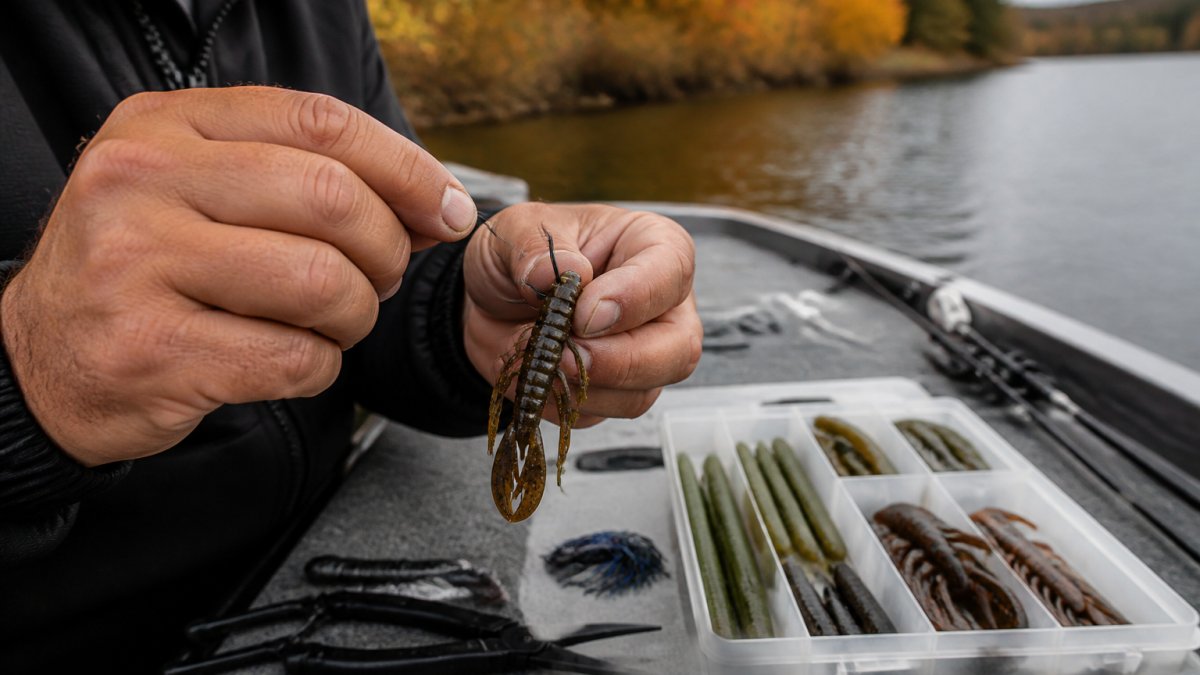
Texas Rig and Flipping Setup
The Texas rig is the workhorse for fall creature baits. Thread the bait onto a wide-gap hook, bury the point in the plastic, and add a bullet weight just heavy enough to reach your cover.
For flipping and pitching into dense vegetation, go heavier. For open water around scattered cover, go lighter and let the bait flutter down.
Our Claw Bug 4" has a built-in hook slot that makes weedless rigging quick, and its thick body with two flanged claws and six legs creates a subtle swimming action as it falls. That subtle action is exactly what cold, pressured bass want.

Carolina Rig and Jig Trailer Options
The Carolina rig shines when you want a slow, dragging presentation across bottom structure. Use a lighter weight and let the bait trail behind, fluttering as it moves.
Creature baits also make excellent jig trailers. The Craw Critr 4" has a belly pocket designed to hold scents or rattles, which adds sound and smell to your presentation. The FlapN CritR 4" works the same way, and its claws and tentacles move with even the slightest rod-tip movement as it drops through cover.
Creature Bait vs Stick Bait: Which Fall Bait Wins?
Creature bait versus stick bait is not really a contest. They do different jobs. A stick bait is a finesse tool for finicky fish.
Stick baits excel when bass are pressured, when the water is clear, and when you need a subtle, slow presentation. They are a staple of fall fishing for good reason.
Creature baits win when you need water displacement, a bigger profile, and more movement. In stained water or around heavy cover, the extra bulk and motion of a creature bait gives bass a target they can find.
| Bait Type | Best Fall Scenario | Fall Rate | Cover Handling |
|---|---|---|---|
| Creature bait | Bass on crawfish, pinned to cover | Slow, fluttering | Excellent in vegetation |
| Stick bait | Pressured, finicky bass, clear water | Slow, subtle | Good, less bulk |
| Swimbait | Bass chasing shad in open water | Moderate, steady | Best in open water |
| Hard bait | Aggressive, chasing fish | Fast | Open water and edges |
When to Use Creature Baits Instead of Other Fall Lures
Use a creature bait instead of other fall lures when bass are holding tight to cover, feeding on crawfish, and refusing to chase. Those three conditions together are the green light.
Here is a quick decision guide for fall scenarios:
- Bass chasing shad on top: swimbait or hard bait, not a creature bait.
- Bass pinned to vegetation or wood: creature bait, Texas or flipping rig.
- Bass on bottom structure in cold water: creature bait on a Carolina rig, slow drag.
- Pressured, clear water, finicky fish: stick bait or finesse worm.
- Stained water, low visibility: creature bait with rattles or scent.
If you are a weekend angler with limited hours, the creature bait earns its keep in the cover phase. That is when a slow, bulky presentation out-fishes everything else in the box.
Creature Bait Colors for Bass in Fall Water Conditions
Creature bait colors for bass in fall should match water clarity and forage, not the season. Clear water calls for natural colors. Stained or muddy water calls for darker, higher-contrast colors.
Here is how we pick:
- Clear water: green pumpkin, watermelon, natural crawfish tones.
- Stained water: black and blue, junebug, darker crawfish patterns.
- Muddy water: black, black and blue, high-contrast colors that create a silhouette.
Our creature baits come in a range of fish-catching colors, including green pumpkin, black and blue, and hematoma patterns, so you can match the water you actually fish. The Craw Tube 4" is a good example of a bait that works in a range of conditions, with a hollow body for inserting a rattle and a solid head that makes rigging easy and helps each bait last longer.
Cost, Durability, and Value Per Fish
Cost, durability, and value per fish matter more in fall than any other season, because you are often fishing heavy cover where baits get torn up. A cheap bait that tears after one fish is not a bargain.
Our creature baits run $5 to $6 per bag of five. That works out to roughly $1 to $1.20 per bait. The real question is how many fish each bait survives.
Durability comes down to plastic quality. A soft, salty plastic with a solid head, like our Craw Tube 4", holds up better than a thin, brittle bait.
Value per fish is the number that actually matters. If a bait catches three or four bass before it tears, it has paid for itself. If it tears on the first fish, it has not. Buy baits built to survive strikes, not just to look good in the package.
Conclusion: Making the Call for Your Water
The honest answer to whether a soft plastic creature bait is worth it for fall fishing is: it depends on what the bass are doing on your water. If they are chasing shad, no.
The anglers who catch fish in fall are the ones who carry both a moving bait and a slow, bulky bait and switch based on what the fish tell them. That is the whole strategy.
Just Lures Fishing carries the exclusive Whack Em Lures line, including the Brush Hawg 6", Claw Bug 4", Craw Critr 4", Craw Tube 4", and FlapN CritR 4", all built for exactly this kind of fall fishing.

Frequently Asked Questions
Are creature baits good for fall bass fishing?
Yes, with conditions. Fall bass often hold tight to cover and feed on crawfish and bluegill, and a creature bait's appendages move water and trigger reaction strikes in those spots. Soft plastics excel when fish are finicky or holding in cover, which describes many fall days. When bass are chasing shad in open water, a swimbait or hard bait usually outscores a creature bait. Match the bait to whether fish are pinned to structure or roaming.
When should you use a creature bait instead of a stick bait?
Use a creature bait when you need bulk, water displacement, and a slower fall around cover, such as pitching into brush, laydowns, or dock edges. A stick bait shines for a subtle, horizontal shimmy on a weightless or wacky rig in open water. In fall, if bass are pressured or sitting deep in vegetation, the bigger profile and moving appendages of a creature bait usually draw more attention than a stick bait's quieter action. Carry both and let the fish decide.
How do you rig a creature bait for fall fishing?
A Texas rig with a 3/0 to 5/0 wide-gap hook and a 1/8 to 3/8 oz bullet weight covers most fall scenarios. Rig it weedless so it slides through cover, and use the built-in hook slot on baits like the Whack Em Claw Bug 4" for clean placement. For deeper structure, a Carolina rig keeps the bait up and moving. For flipping and pitching, peg the weight and slow the fall. A jig trailer rig also works when you want a compact profile.
What colors should you use for creature baits in fall?
Match color to water clarity and forage. In clear water, natural tones like green pumpkin and watermelon mimic crawfish and bluegill. In stained or murky water, darker colors such as black and blue or junebug create a stronger silhouette. Fall bass keyed on bluegill often respond to green pumpkin with orange or red flake accents. If shad are the main forage, a lighter, baitfish-toned creature bait can work, though a swimbait usually beats it in open water.
Are soft plastic baits better than hard lures for fall bass?
Neither wins outright. Fish may respond better to hard baits when they are aggressive or chasing prey, while soft plastics excel when fish are finicky or holding in cover. In fall, bass often do both on the same day. Start with a search bait like a swimbait or crankbait to find active fish, then switch to a creature bait to pick apart cover where fish have settled. Let the fish's mood, not the lure category, drive the switch.