
How to Rig Soft Plastics for Beginners: 2026 Guide
Table of Contents
- Texas Rig for Beginners: The First Setup to Master
- Best Hooks for Soft Plastics: Sizes, Gaps, and Weights
- Weedless Rigging Techniques That Keep You Snag-Free
- How to Rig Swimbaits and Paddletails for a Natural Action
- Stop Losing Baits: Preventing Plastic Tearing
- Troubleshooting Short Strikes and Missed Hooksets
- Frequently Asked Questions
Last Updated: September 27, 2026
Texas Rig for Beginners: The First Setup to Master
Learning how to rig soft plastics for beginners starts with one rig above all others: the Texas rig, the first and most reliable way to rig soft plastics. It's the most common and accessible method for presenting soft plastics like Senko worms and creature baits, according to FishingBooker's soft plastic lure guide, and it's the setup that teaches you everything else.
The Texas rig solves that. It's weedless, it's simple, and it catches fish in cover where other presentations snag and die.
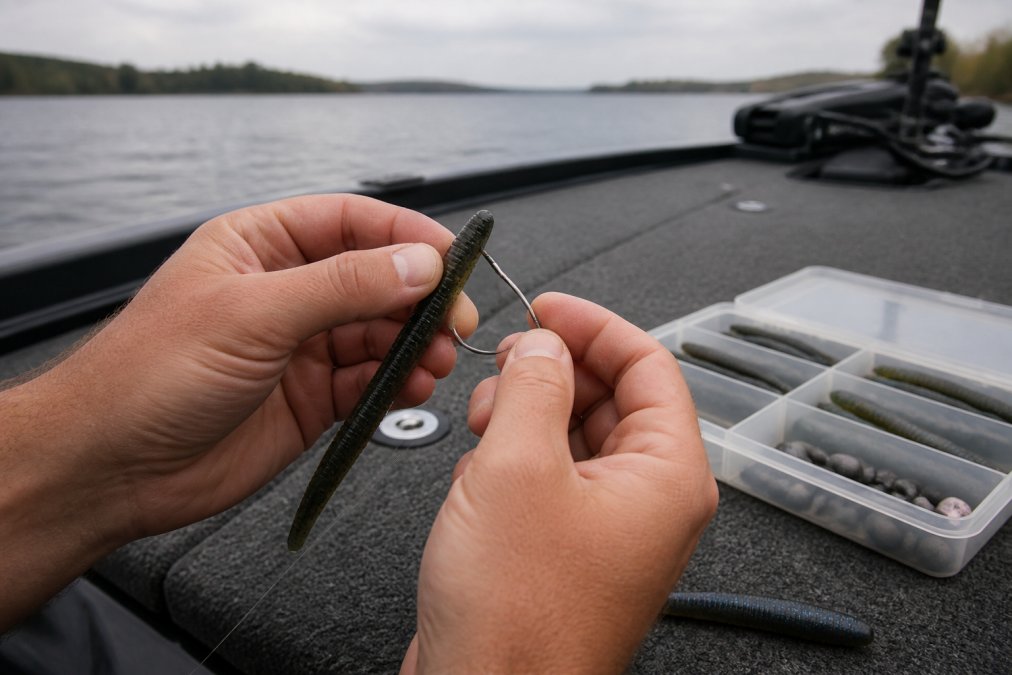
Step-by-Step Texas Rig Setup
What you need: an offset hook, a bullet weight, and a soft plastic bait.
- Slide the bullet weight onto your line, point first.
- Tie on your offset hook using a palomar or improved clinch knot.
- Insert the hook point into the nose of the bait, about 1/4 inch deep.
- Push the hook through and out the bottom, then slide the bait up the shank.
- Rotate the bait and bury the hook point back into the plastic, just under the surface.
Expected result: a completely weedless bait that slides through grass, brush, and rock without hanging up.
The rigging takes under a minute once you've done it a few times. The trick is keeping the bait straight on the shank so it doesn't spin on the retrieve.
Best Hooks for Soft Plastics: Sizes, Gaps, and Weights
The best hook for soft plastics matches the bait's body length and the cover you're fishing. An offset hook with a wide gap and a needle point gives you the penetration and weedlessness beginners need most.
Hook size is where most new anglers go wrong. Too small, and the hook can't clear the plastic on the hookset. Too large, and the bait tears on every cast.
| Bait Length | Hook Size | Weight | Best For |
|---|---|---|---|
| 4-5 inch worm | 1/0 to 2/0 | 1/8 oz | Open water, light cover |
| 5-6 inch worm | 3/0 | 3/16 oz | Grass, laydowns |
| 6-7 inch creature bait | 4/0 | 1/4 oz | Heavy cover, pads |
| 7+ inch swimbait | 5/0 | 3/8 oz | Deep structure |
The hook gap matters more than overall length. You need enough gap to clear the bait's body when you set the hook. A wide-gap hook solves this without forcing you into an oversized hook.
For beginners, the Whack Em Attack EWG Hooks from Just Lures Fishing are a solid starting point. They're forged from high-carbon steel with a 2X strong construction, so they hold up to bulky creature baits without bending. The black nickel finish resists corrosion, and they come in sizes 1/0 through 5/0, which covers nearly every soft plastic in a starter box.

Weedless Rigging Techniques That Keep You Snag-Free
Weedless rigging is the art of hiding the hook point inside or against the plastic so it slides through cover without catching. The Texas rig is the foundation, but skin hooking is the refinement that separates beginners from anglers who actually land fish in heavy grass.
Skin Hooking for Weedless Performance
Skin hooking means burying the hook point just barely under the surface of the plastic, not deep inside it. The point sits flush with the bait's skin, ready to expose on the strike but protected on the retrieve.
Here's the difference in practice: a deeply buried hook point requires a hard, fast hookset to punch through the plastic. A skin-hooked point needs almost no effort. The plastic peels away on contact, and the point finds the jaw.
To skin hook properly:
- Bring the hook point to the surface of the bait
- Press it in just enough to cover the barb
- Run your thumb over it. If you can feel the point, it's too shallow. If the plastic dimples, it's right.
This one adjustment fixes most missed hooksets beginners blame on "short strikes."
How to Rig Swimbaits and Paddletails for a Natural Action
Swimbaits and paddletails need a different approach than worms. These baits are designed to mimic baitfish, and the rigging has to preserve that action or you're just dragging a lump of plastic through the water.
The key is a weighted hook or a belly-weighted hook that keeps the bait running true. A paddletail rigged on a plain offset hook will roll on its side at speed. Add a belly weight, and it tracks straight with the tail kicking.
There are three common ways to rig a swimbait for beginners, each with a trade-off:
1. Belly-weighted offset hook (best all-around) This is the most versatile setup. The weight sits under the belly, so the bait sinks horizontally and the tail kicks freely. Use it for paddletails in the 3.5- to 5-inch range.
- Measure the hook against the bait. The hook point should exit right where the tail section begins.
- Insert the hook at the nose, run it through the body, and exit at the top.
- Slide the bait up onto the shank and skin hook the point.
- Test the action in shallow water before you cast. If it rolls, adjust the bait's position on the shank.
2. Screw-lock jighead (best for deeper water) A screw-lock jighead has a corkscrew bait keeper at the nose. You thread the plastic onto the screw, which locks it in place without tearing. This is the go-to for fishing swimbaits deeper than 8 feet or in current. The trade-off: the exposed hook snags more in grass, so it's not ideal for heavy cover.
3. Underspin (best for pressured fish) An underspin is a weighted hook with a small willow-leaf blade attached to the belly. The blade adds flash and vibration, which triggers reaction strikes when fish have seen too many plain paddletails. Rig it the same way as a belly-weighted hook, but expect the blade to add a slight roll. Use a slower retrieve to keep it tracking straight.
For a paddletail specifically:
- Match the hook size to the bait length. A 4-inch paddletail pairs with a 3/0 or 4/0 hook.
- Insert the hook at the nose, run it through the body, and exit at the top.
- Slide the bait up onto the shank and skin hook the point.
- Test the action in shallow water before you cast. If it rolls, adjust the bait's position on the shank.
The Whack Em Ripple Shad and Swim Minnow are versatile swimbaits.

Stop Losing Baits: Preventing Plastic Tearing
Plastic tearing is the number one complaint from anglers who fish around structure. The fix comes down to three habits: proper hook placement, bait keepers, and accepting that some baits are meant to be sacrificed.
Troubleshooting Short Strikes and Missed Hooksets
Short strikes and missed hooksets almost always trace back to one of three causes: a hook point that's buried too deep, a hook gap that's too narrow, or a hookset that's too slow. Fix the rig, and the problem usually disappears.
A quick diagnostic table:
| Symptom | Likely Cause | Fix |
|---|---|---|
| Fish taps but no hookup | Hook point buried too deep | Skin hook the bait |
| Bait comes back mangled | Hook gap too narrow | Size up or use wide-gap hook |
| Fish feels heavy then comes off | Hookset too slow | Reel down and sweep, don't swing |
| Bait rolls on retrieve | Rigged off-center | Reposition on shank |
| Fish hits tail but no hookup | Bait too long for hook | Downsize bait or upsize hook |
Frequently Asked Questions
What is the best rig for fishing with soft plastics as a beginner?
The Texas rig is the most common and accessible setup for beginners, according to FishingBooker (2026). It works well with Senko worms and creature baits. Thread your soft plastic onto an offset hook, then slide a bullet weight above it. This setup lets you fish through grass and wood without constant snags, making it ideal for learning how to rig soft plastics without losing tackle every cast.
Should you use a sinker with soft plastics?
It depends on depth and cover. A bullet weight helps the bait sink faster and punch through vegetation, which is standard for a Texas rig for beginners. In shallow water or when fish are feeding near the surface, a weightless presentation gives a slower, more natural fall. Try both and see what the fish respond to on your local water.
What size hook should I use for soft plastic worms?
Match the hook to the bait's thickness and length. A general rule: use a 3/0 to 4/0 extra wide gap (EWG) hook for most 5- to 7-inch worms. The hook gap should be about twice the width of the bait's body. Whack Em Attack EWG Hooks come in sizes 1/0 through 5/0, so you can match any soft plastic in your box.
How do I keep my soft plastics from tearing?
Use a bait keeper or a dab of super glue at the nose. Slide the hook through the same entry point each time rather than creating new holes. When a bait gets torn, bite off the damaged section and re-rig. Proper rigging extends the life of any bait.