
How to Choose the Right Chatter Jig for Your Fishing
Quick Summary
A chatter jig is a lead-head jig with a metal blade that vibrates on the retrieve, sending a thumping signal through the water. Choose the weight by depth, current and retrieve speed, and choose color by water clarity and local forage. Most anglers start with a 3/8 oz. chatter jig.
- Pick a 1/4 oz. chatter jig for shallow water and a slower retrieve.
- Step up one weight class when current is moving the bait off course.
- Use a 1/2 oz. chatter jig for deep water or heavy grass and cover.
- Choose natural colors for clear water and dark colors for stained water.
- Match trailer length to jig weight so the blade still vibrates freely.
Table of Contents
- What a Chatter Jig Does and When It Beats Other Baits
- Matching Jig Weight to Depth, Current and Retrieve Speed
- Chatterbait Size for Bass: Choosing 1/4, 3/8 or 1/2 oz.
- Best Chatterbait Colors for Bass by Water Clarity and Forage
- Chatterbait Trailers for Bass: Matching Profile and Action
- Best Chatterbait Setup: Rod, Reel, Line and Hook Strength
- Choosing Your First Chatter Jig at Just Lures Fishing
- Frequently Asked Questions
What a Chatter Jig Does and When It Beats Other Baits
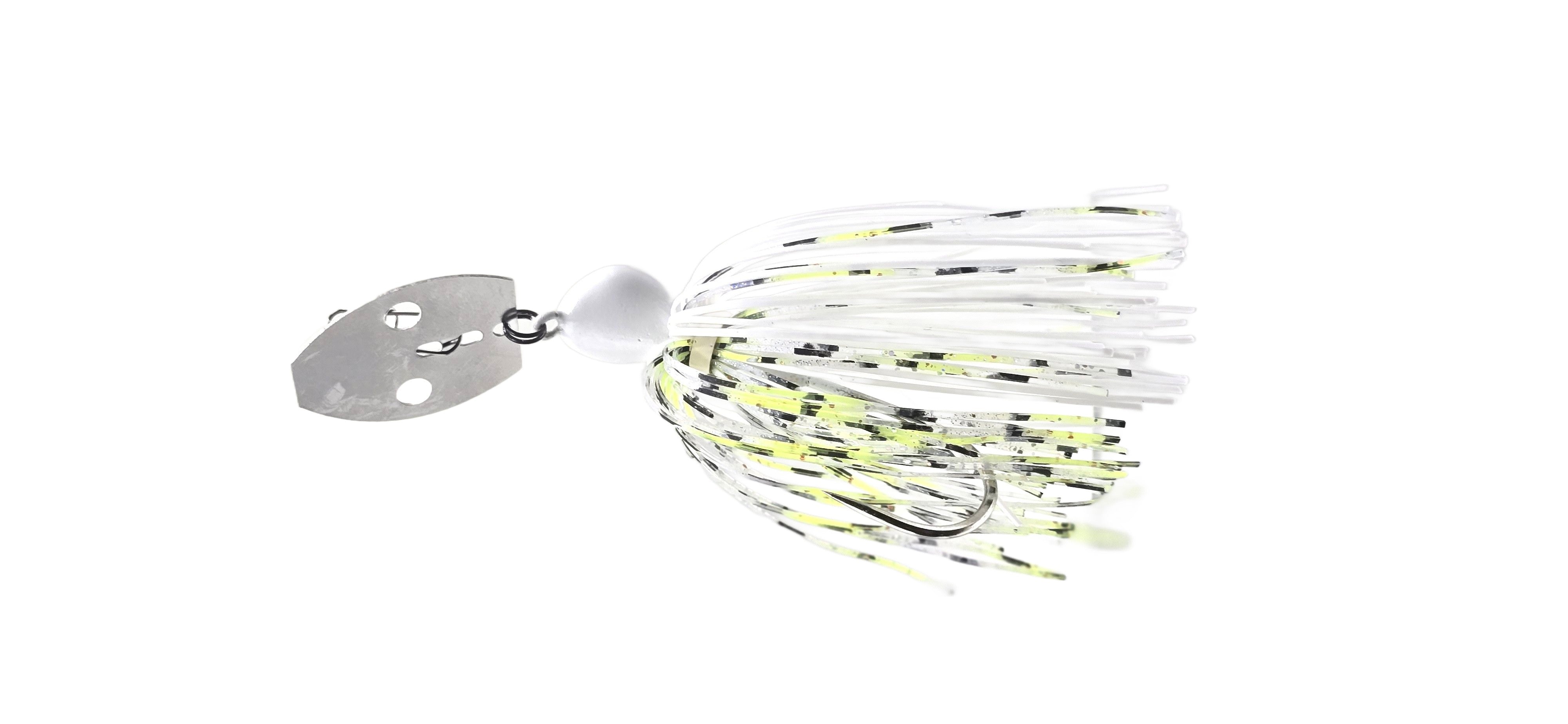
A chatter jig is a bladed jig: a lead head with a metal blade mounted on a wire arm, usually dressed with a skirt and a soft-plastic trailer. The blade vibrates on the retrieve and sends a thumping signal through the water. That signal is the reason it works, and it is why the right choice depends on the water you fish.
A chatter jig is a go-to search bait because the blade does the attracting. A fish can hear and feel the jig before it sees it, which helps in dirty water and around cover where a plain jig gets lost.
A chatter jig beats other baits in a few specific situations:
- Stained or murky water, where vibration matters more than visual detail
- Grass, wood and rock, where the head and weed guard let you pull through cover
- Fish that are active and roaming, rather than holding tight to a single spot
- Covering water fast when you need to locate fish before slowing down
It is not the best choice everywhere. In clear, pressured water with fish that have seen plenty of lures, a slower presentation like a finesse worm or a shaky head often outfishes it. Knowing when to switch is part of choosing the right jig.
Matching Jig Weight to Depth, Current and Retrieve Speed
Weight is the most consequential choice you make with a chatter jig. It determines fall rate, running depth, blade vibration intensity, and how well you can feel the bait. Most anglers default to 3/8 oz., but that is a starting point, not a rule. The right weight depends on three variables: depth, current, and retrieve speed.
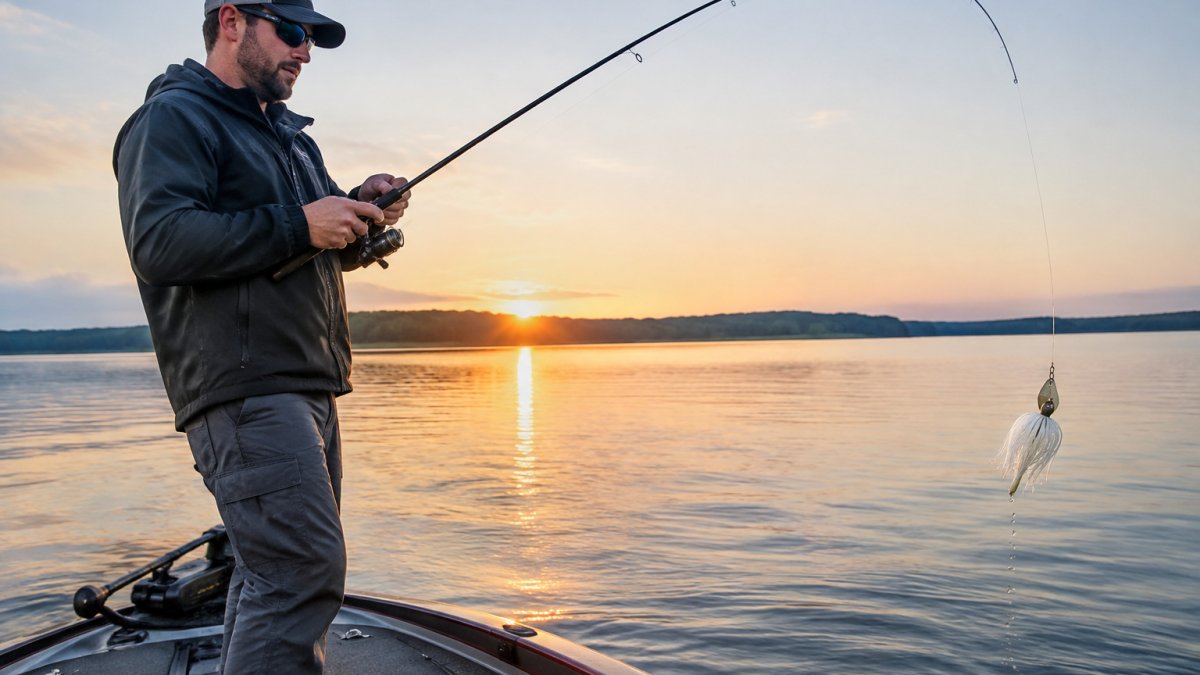
Depth. A heavier jig falls faster and stays deeper on a given retrieve. In 2-6 feet of water, a 1/4 oz. jig keeps the bait in the strike zone longer and produces a slower, more seductive fall. In 8-15 feet, a 3/8 oz. jig gives you a balanced fall and enough vibration to call fish without overworking the bait. Beyond 15 feet, or when you need to count the jig down to a specific ledge, a 1/2 oz. jig holds depth and maintains contact.
Current. Moving water pushes a light jig off course and lifts it toward the surface. In rivers, tidal flow, or wind-driven current, step up one weight class: 3/8 oz. becomes 1/2 oz., and 1/2 oz. becomes 3/4 oz. if the flow is strong. The heavier head resists drift and keeps the blade thumping at the speed you intend.
Retrieve speed. A fast, steady retrieve with a 1/4 oz. jig can cause the bait to rise and skip. If you like to burn a chatter jig to trigger reaction strikes, a 3/8 oz. or 1/2 oz. head tracks straighter and stays down. Conversely, a slow, lift-and-drop retrieve pairs well with a lighter jig because the slower fall gives fish more time to react.
Use this as a starting framework, then adjust based on what you feel:
| Condition | Suggested Weight | Why |
|---|---|---|
| Shallow water (2-6 ft), slow retrieve | 1/4 oz. | Stays in the strike zone longer; slower fall |
| General use, mid-depth (6-12 ft) | 3/8 oz. | Balanced fall and blade vibration |
| Deep water (15+ ft) or moving current | 1/2 oz. | Holds bottom and resists drift |
| Heavy grass or thick cover | 1/2 oz. or heavier | Drives through cover and maintains contact |
A practical method: start with 3/8 oz., make a few casts, and note whether you can feel the blade thumping and whether the jig stays in the zone you want. If you lose contact or the bait rises, go heavier. If fish are following but not eating, or the fall feels too fast, go lighter.
Watch out: A jig that is too light for the depth or current can lose contact with the bottom, skip off cover, and cost you fish you should have caught. If you cannot feel the blade, you are not in control.
Chatterbait Size for Bass: Choosing 1/4, 3/8 or 1/2 oz.
Size is mostly a weight decision, but the hook also changes. The Chatter Jig comes in 1/4 oz. (3/0 hook), 3/8 oz. (4/0 hook) and 1/2 oz. (5/0 hook) sizes, so you can match the hook to the fish you expect.
Pick the 1/4 oz. size for smaller bass, shallow flats and a slower, steadier retrieve. Choose the 3/8 oz. for most bass situations and when you want one jig to handle several depths. Go with the 1/2 oz. when you are fishing heavy cover, need to drive the bait through grass, or expect larger fish.
Start with the 3/8 oz. if you are unsure. Add the other two sizes once you know which depths and cover you fish most.
Best Chatterbait Colors for Bass by Water Clarity and Forage
Color should match two things: how much light reaches the fish and what they normally eat. In clear water, natural tones tend to look most realistic. In dark or stained water, bolder colors and darker profiles help the bait show up.
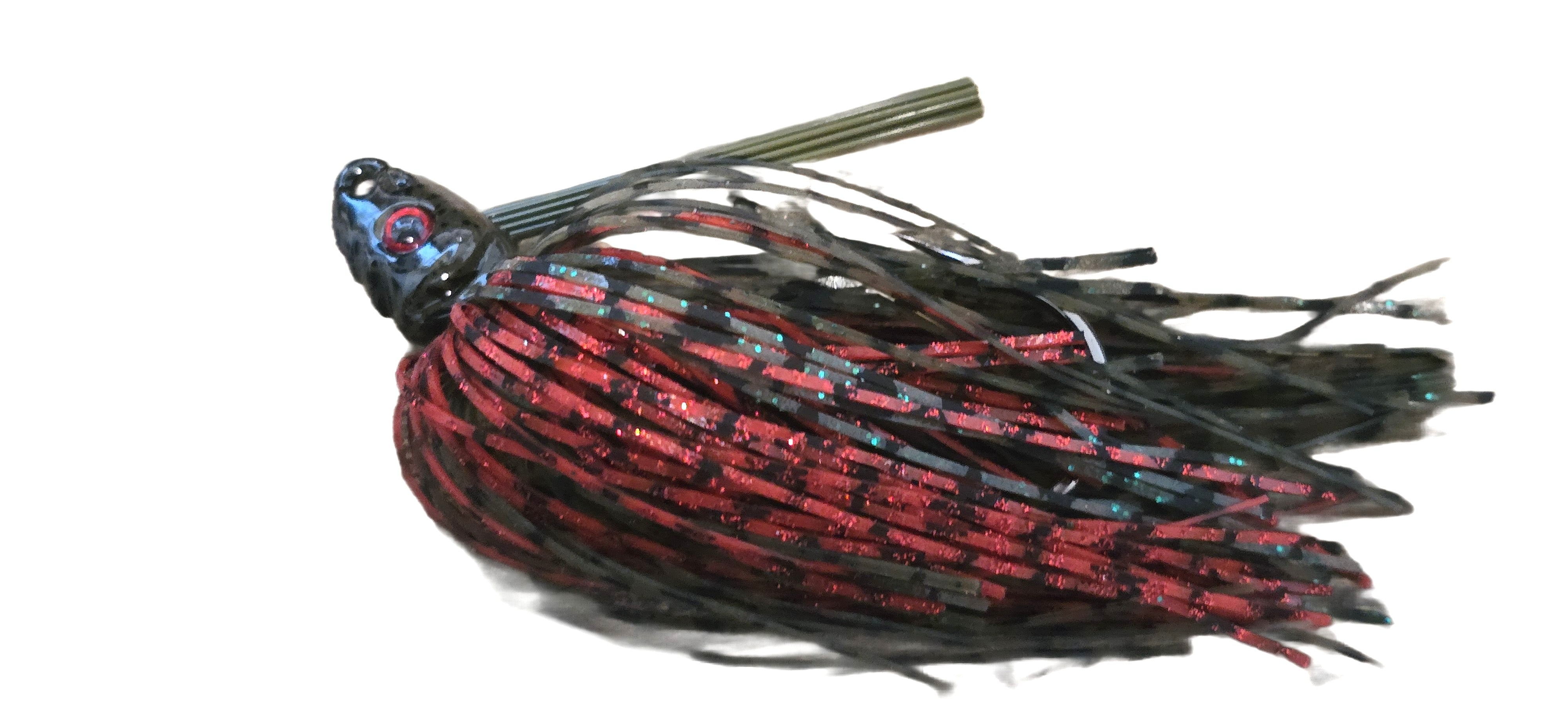
The Swim Jig in Green Pumpkin / Red suits clear or natural-forage water, where a natural look blends with local baitfish and crawfish. The Swim Jig in Black / Blue is a better pick for dark or stained water, where a strong silhouette helps the fish find the bait.
Match your color to the forage you see. If crawfish are common, a brown or green pumpkin tone makes sense. If shad are the main food, lighter, flashier colors often work better.
Chatterbait Trailers for Bass: Matching Profile and Action
The trailer is not an accessory, it is part of the bait's action and profile. It affects how the jig falls, how the blade loads and unloads, and what silhouette the fish sees. Choosing the right trailer means matching three things: size to the jig, profile to the forage, and action to the retrieve speed and water temperature.
Size. A trailer that is too large overwhelms a small jig and dampens blade vibration; too small and you lose bulk and hook-up profile. As a rule, match trailer length to jig weight: 1/4 oz. jigs pair well with 3-4 inch trailers, 3/8 oz. with 4-5 inch trailers, and 1/2 oz. with 4.5-6 inch trailers.
Profile. Paddle-tail and swimbait trailers add a wide, thumping profile and work well when shad or other baitfish are the primary forage. Craw-style trailers add bulk, a slower fall, and a flapping action that suits crawfish-heavy waters. A twin-tail grub splits the difference and adds a subtle, pulsing action that works in pressured water.
Action and temperature. In cold water (below 50°F), fish are less willing to chase. A larger, bulkier trailer slows the fall and gives fish more time to react. In warm water (above 65°F), a smaller, livelier trailer keeps the bait moving and matches a faster retrieve. If you are burning the jig, a compact paddle-tail tracks better; if you are lifting and dropping, a craw-style trailer adds appeal on the fall.
Matching to forage. If you see shad, choose a lighter, flashier paddle-tail. If crawfish are present, a brown or green-pumpkin craw trailer makes sense. Match the trailer color to the jig skirt or contrast it deliberately, dark jig with a lighter trailer for a two-tone look that adds flash.
Watch out: A trailer that slides down the hook shank changes the bait's action and can cost you hook-ups. Use a trailer keeper or a drop of superglue to keep it in place, and check it after every few fish. If the trailer tears, replace it, a torn trailer kills vibration.
Best Chatterbait Setup: Rod, Reel, Line and Hook Strength
A medium-heavy rod gives you the backbone to pull fish out of cover and the sensitivity to feel the blade. Pair it with a reel that has a smooth drag and enough line capacity for your fishing.
For line, many anglers use braid for its strength and feel, often with a fluorocarbon leader for stealth in clear water. Match the line to the cover you fish.
Hook strength matters because bladed jigs are often used around heavy cover and big fish. The jigs use Mustad hooks, and the 5/0 options are the heavier-hook choice for larger fish. Check your hook after every few fish, and replace it if the point is dull or bent.
Watch out: A dull hook is the most common reason anglers lose fish with a bladed jig. Sharpen or replace the hook before a long day.
Choosing Your First Chatter Jig at Just Lures Fishing
If you are buying your first chatter jig, start simple. Choose the 3/8 oz. size for general use, a natural color for clear water and a dark color for stained water. Add a trailer that matches the forage in your lake.
The Chatter Jig is built on Mustad Ultra Point hooks with a high-strand skirt and a blade designed for consistent vibration. You can shop the Chatter Jig and see the full size range before you buy.
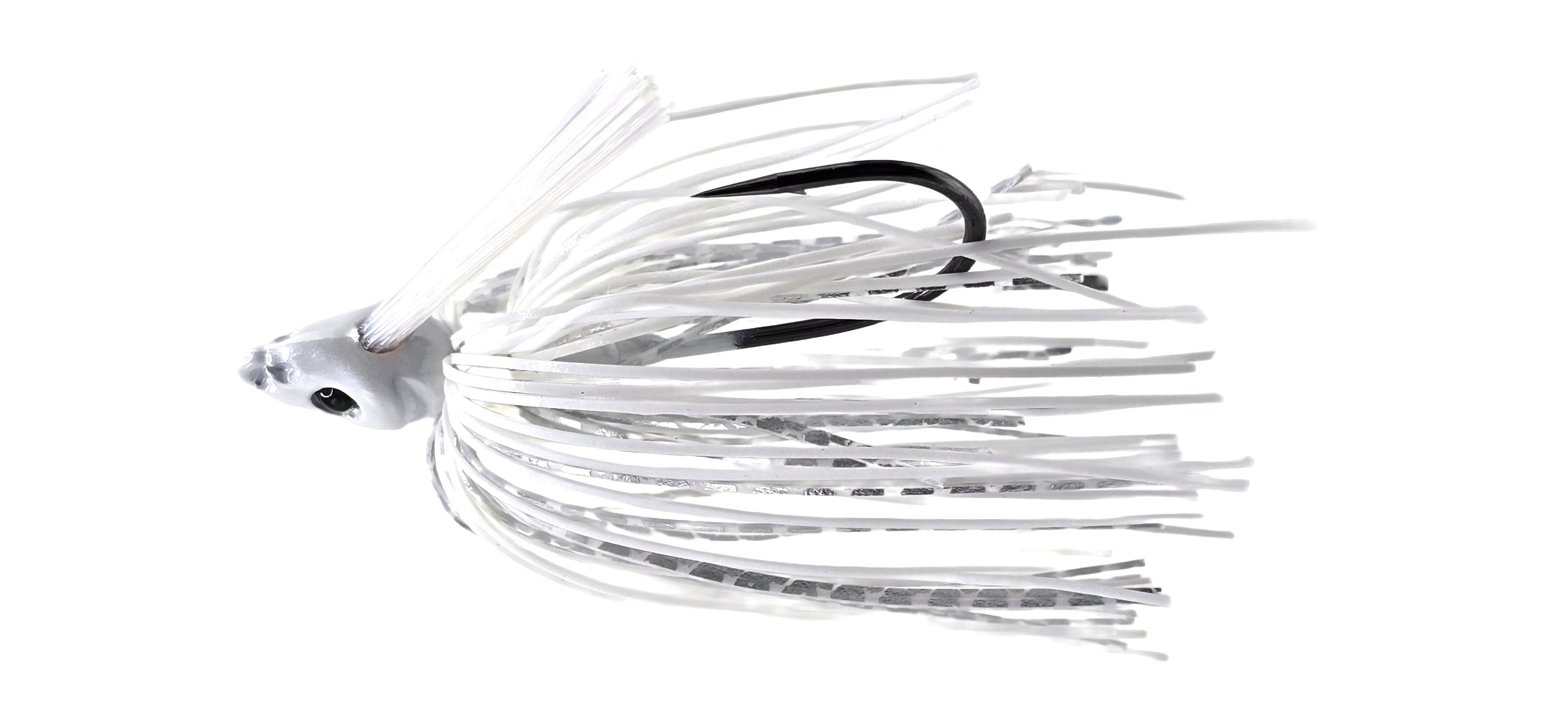
If you want an alternative for the same conditions, a swim jig offers a similar profile with a recessed line tie and weed guard. For color choices, the green pumpkin and red swim jig suits clear or natural-forage water, while a black and blue option works better in dark water.
Start with one jig, learn how it behaves in your water, and build from there.
Frequently Asked Questions
What size chatter bait is best?
For most bass fishing, the 3/8 oz. chatter jig is the most versatile choice, covering mid-depth water and general retrieves. Use the 1/4 oz. size in shallow water, over grass or when bass are holding tight to cover and need a slower, smaller presentation. Step up to the 1/2 oz. size for deeper water, strong current or when you need the bait to get down quickly and hold a fast retrieve. The Whack Em Chatter Jig comes in all three sizes, with matching hook sizes from 3/0 to 5/0.
What color chatter bait should I use?
Match the color to water clarity and forage. In clear water, natural shad and white tones usually work best. In stained or murky water, choose brighter chartreuse or white-chartreuse combinations that give bass a stronger silhouette to track. Dark colors can help in low light or dark water. When in doubt, carry a few contrasting colors and let the bass tell you which one they want that day.
What trailer should I use on a chatter jig?
A soft-plastic trailer adds bulk, scent and a secondary action behind the blade. Use a compact paddle-tail or small swimbait-style trailer for a subtle profile in clear water, and a larger trailer with more action when bass want a bigger meal. Make sure the trailer sits securely on the jig so it does not slide off after a few casts.
