
How to Catch Bass in Clear Water: 7 Proven Tactics
Table of Contents
- Why Clear Water Changes Everything for Bass Fishing
- Reading Water Clarity: What 2 to 6 Feet of Visibility Tells You
- Best Lure Colors for Clear Water
- Fluorocarbon Line for Clear Water: Why Line Diameter Matters
- How to Fish Finesse Baits for Bass in Clear Water
- Stealth and Boat Positioning: Long Casts and Shadow Lines
- Using Electronics and Sonar to Find Clear Water Structure
- Reaction Baits, Wind, and Surface Chop: When to Speed Up
- Frequently Asked Questions
Last Updated: October 14, 2026
Why Clear Water Changes Everything for Bass Fishing
Bass behave differently when they can see you. In stained or muddy water, a bass relies on its lateral line and vibration to hunt, and it will often hold tight to cover while a boat drifts within a few feet of it. In clear water, that same fish is working with eyesight as its primary tool.
That single fact reshapes everything about how to catch bass in clear water, and it's the first thing to understand when learning how to catch bass in clear water.
Here's the throughline for this whole guide: in clear water, the fish isn't the variable you're managing. Your visibility is. Every tactic that follows is really about reducing what the bass can see of you and your tackle.
Reading Water Clarity: What 2 to 6 Feet of Visibility Tells You
Water clarity is the single most useful measurement an angler can take, and it's free. Lower a white lure or a light-colored jig until it disappears, then measure that depth against your line. That number tells you how the fish are feeding before you ever make a cast.
Most anglers treat "clear" as one condition. It isn't. Two feet of visibility and six feet of visibility demand different presentations, different line, and different boat positioning.
| Visibility | What Bass Rely On | Your Adjustment |
|---|---|---|
| 2-3 feet | Mixed sight and vibration | Standard finesse, slightly heavier line |
| 3-4 feet | Mostly sight | Fluorocarbon leader, natural colors |
| 4-6 feet | Almost entirely sight | Long casts, light line, translucent baits |
| 6+ feet | Pure sight, extreme pressure | Downsize everything, back off the bank |
The takeaway: as visibility climbs past 3 feet, every element of your presentation gets scrutinized harder. A bass in 5 feet of clarity can inspect a bait from several feet away and refuse it without ever touching it. That's why the "clear water" advice you read online so often fails: it treats clarity as a switch rather than a scale.
Best Lure Colors for Clear Water
The best lure colors for clear water are natural, translucent, and muted: greens, browns, smoke, and clear or semi-transparent finishes that mimic local forage. Bright chartreuse and loud colors that work in muddy water often spook clear-water bass because they read as unnatural against a bright, high-visibility background.
Natural and Translucent Color Patterns
Think about what a bass actually eats in a clear lake: shad, bluegill, crawfish, and smaller baitfish. None of them are neon. Green pumpkin, watermelon, smoke, and natural craw patterns match that forage base and disappear into the visual noise of a clear-water environment.
Translucent soft plastics are especially effective because they let light pass through, mimicking the way real baitfish scatter light. A bait that's slightly see-through reads as alive; a solid, opaque bait reads as a hunk of plastic.
Profile Matching Your Local Forage
Color matters, but profile matters more. A bass that's keyed on 3-inch shad will ignore a bulky 5-inch bait even if the color is perfect. Match the length and silhouette of whatever the fish are actually eating, then fine-tune the color.
Our Whack Em Ned Ticker comes in 2.5-inch and 3.5-inch lengths specifically so you can match the size of your local forage without guessing. It's a stick bait with a custom tail that adds subtle vibration, which matters in clear water where you can't rely on a loud, bulky presentation to get attention.

Fluorocarbon Line for Clear Water: Why Line Diameter Matters
Fluorocarbon line for clear water is the single highest-impact tackle change you can make. Fluorocarbon has a refractive index very close to water, so it becomes nearly invisible below the surface, while monofilament and braid catch light and telegraph a warning to every bass in the area.
Line diameter matters as much as line material. A 15-pound fluorocarbon is thick enough to cast a shadow and stiff enough to affect how a finesse bait falls. Dropping to 8-pound or even 6-pound fluorocarbon on a spinning setup reduces both visibility and the unnatural resistance that makes a bass drop a bait.
The trade-off is real: lighter line means more break-offs around structure. That's the price of fishing clear water, and it's why you need to fish with a slightly looser drag and check your line for nicks after every fish.
Spooling and Knots That Hold on Light Line
Light fluorocarbon punishes sloppy rigging. Spooling matters because fluorocarbon has more memory than braid; if you spool it on tight and let it sit coiled, it will jump off the reel in loops and cost you distance on the cast that matters most. Spool it on with moderate tension and let it relax before your first trip.
For knots, the Palomar is the simplest reliable choice for fluorocarbon because it seats evenly and doesn't create the friction points that weaken an improved clinch. Wet every knot before you cinch it down. A dry-cinched fluorocarbon knot loses a meaningful share of its rated strength.
How to Fish Finesse Baits for Bass in Clear Water
Finesse fishing is the core skill for clear water because it presents a small, natural-looking meal that a pressured bass can't easily refuse. The goal is a slow, subtle presentation that keeps the bait in the strike zone longer and gives a cautious fish time to commit.
Drop Shot, Shaky Head, and Ned Rig Presentations
Three finesse rigs do most of the work in clear water:
- Drop shot: A weight at the bottom with the bait suspended above it. The bait stays in the strike zone indefinitely, which is perfect for bass that are suspended off structure and unwilling to chase.
- Shaky head: A jig head with a straight-tail worm, fished with a drag-and-pause retrieve that keeps the bait ticking along the bottom. Our Whack Em Attack Shakey Jig uses a heavy-duty spring to lock soft plastics in place, which matters when you're skipping it under docks and overhanging brush where clear-water bass love to hold.
- Ned rig: A small, dense jig head paired with a short stick bait. The Ned rig is the ultimate clear-water finesse presentation because it's compact, slow-falling, and nearly impossible for a bass to inspect and reject.
The common thread across all three: you're not trying to trigger a reaction. You're trying to make a wary fish believe the bait is real. That means long pauses, subtle movement, and patience. The drag-and-pause retrieve wins more clear-water bites than any aggressive twitch.

For the Ned rig specifically, we recommend the Whack Em Tungsten Ned Jig. It's built from 97% tungsten, which makes it smaller and denser than a comparable lead head, so you get a compact profile and better sensitivity to feel the lightest nibble. It pairs with a Whack Em worm, craw, or creature bait, and comes in a pack of three.
Stealth and Boat Positioning: Long Casts and Shadow Lines
Boat positioning is where clear-water anglers lose fish before they ever cast. A bass in clear water can see a boat, a trolling motor, and a standing angler from a surprising distance, and it will move off the spot without ever showing itself.
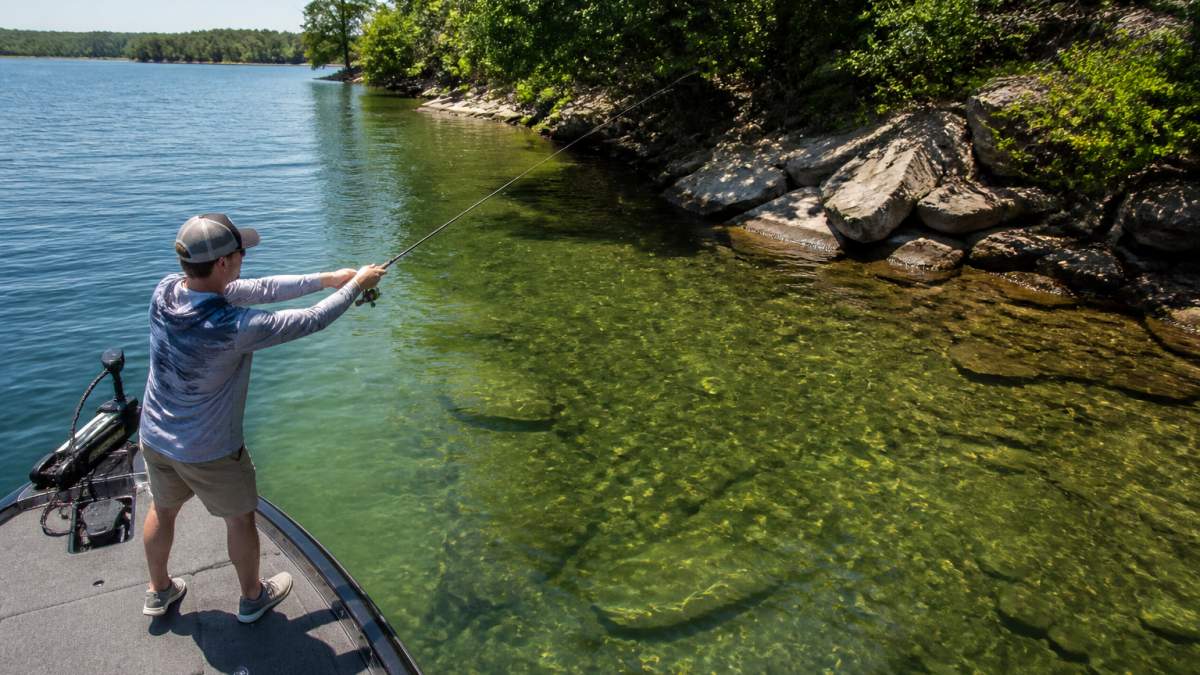
The fix is distance and angles. Long casts keep your boat out of the fish's visual cone. Position yourself so you're casting toward a shadow line or a structure edge rather than sitting directly over it.
Wind helps here. A ripple on the surface breaks up the light and scatters your outline, letting you get closer than you could on flat-calm water.
Using Electronics and Sonar to Find Clear Water Structure
Modern depth finders do more than show you where the fish are; they show you what the fish are relating to. In clear water, bass often hold on subtle structure that's invisible from the surface: channel swings, brush piles, rock transitions, and depth changes that don't show up as a visible bank feature.
Sonar interpretation is the skill most clear-water anglers underdevelop. When you see a group of fish suspended off the bottom near a brush pile, that's a finesse situation: drop shot or Ned rig, presented slowly at their depth.
The real value of electronics in clear water is efficiency. You can eliminate dead water without making a cast, which matters when you're a weekend angler with limited hours on the water. Mark the structure, note the depth, and fish it with the presentation that matches what the sonar is telling you.
Reaction Baits, Wind, and Surface Chop: When to Speed Up
Reaction baits work in clear water, but only under specific conditions. The trigger is surface chop.
When the wind picks up, move to moving baits: a swimbait, a spinnerbait, or a topwater walked across the chop. The disturbance hides your line and your boat, and the bass switch from inspecting to chasing.
Calm, bright, high-pressure days are the opposite. That's when you slow down, downsize, and fish finesse.
Catching bass in clear water comes down to one thing: reducing what the fish can see of you and your tackle. That means downsizing line, matching natural forage, fishing finesse presentations slowly, and staying off the bank.
At Just Lures Fishing, we built our entire selection around that discipline. Our exclusive Whack Em Lures lineup, including the Tungsten Ned Jig, the Ned Ticker, and the Attack Shakey Jig, is designed for the finesse presentations that clear-water bass demand.

Get started with Just Lures Fishing and fish the tackle that gives you the best chance of success on every cast.
Frequently Asked Questions
What is the best bait for bass in clear water?
Finesse baits in natural, translucent colors work best. A Ned Ticker on a Tungsten Ned Jig creates subtle vibration that pressured bass can't ignore, while a 6-inch Money Worm rigged drop shot or shaky head covers deeper structure. Match your profile to local forage: threadfin shad and bluegill patterns dominate most clear lakes. Keep baits small and action subtle, since skittish fish in clear water get a long look before committing.
How do you approach bass in clear water without spooking them?
Stay back from your target and make long casts with light line. Position the boat parallel to banks rather than driving straight in, and use your trolling motor on low speed. Fluorocarbon line for clear water is nearly invisible underwater, which matters when bass can see 4 to 6 feet. Watch your shadow lines too: cast toward shaded banks and keep the sun in front of you so fish don't spot your silhouette first.
What color lures work best in clear water?
Natural and translucent color patterns outperform bright, opaque colors. Green pumpkin, watermelon, and shad-style laminates mimic forage without looking artificial. The best lure colors for clear water include black and blue laminate for low-light conditions and translucent greens for bright sun. Avoid chartreuse or fire tiger unless you're fishing stained pockets or after heavy rain. When in doubt, match the hatch: whatever baitfish you see, throw that profile.
How deep should you fish for bass in clear water?
Bass often hold deeper in clear water because light penetrates further, pushing fish down. Start at 8 to 15 feet around brush piles, channel swings, and rock ledges, then adjust based on your depth finder. In bright, calm conditions, fish can drop to 20 feet or more. During low-light windows, they move shallow to feed. Let your electronics confirm where fish are suspending rather than guessing.