
How Long Does Fall Turnover Last for Fishing?
Last Updated: November 5, 2026
Quick Summary
Fall turnover, the seasonal mixing of a lake's water layers, usually lasts from a few days to a few weeks. Deep lakes and reservoirs take longer, while shallow ponds and lakes hit by a sudden cold front can finish quickly.
- Surface water cools, sinks, and pushes bottom water up until the column mixes.
- A 60-foot reservoir may need two to three weeks of cool nights to turn over.
- A sudden cold front can compress turnover into just a few days.
- Check the surface-to-depth temperature gap over several mornings to judge progress.
- Turnover is largely complete when surface and depth temperatures match for several days.
Table of Contents
- What Fall Turnover Is and How Lake Water Mixes
- How Long Lake Turnover Lasts on Different Lakes
- How to Tell If a Lake Is Undergoing Turnover
- Where Bass Go During Fall Turnover
- Why Fishing Gets Tough During Turnover and What Else Is Affected
- Bass Fishing During Fall Turnover: Tactics That Work
- Planning Your Next Trip Around the Turnover Window
- Frequently Asked Questions
What Fall Turnover Is and How Lake Water Mixes
Fall turnover is the seasonal mixing of a lake's water layers, and it's one of the biggest shifts an angler will see all year. Here's what you need to know: as surface water cools in autumn, it grows denser and sinks, pushing warmer bottom water upward until the whole column mixes. Understanding the process pays off during this stretch, when many anglers stall out.
Lakes normally stratify in summer into distinct layers. The warm upper layer sits on top, a cooler layer sits underneath, and a thermocline separates them. In fall, that separation breaks down. Turnover generally lasts from a few days to a few weeks, and it doesn't happen on every fishery in an area.
- Surface water cools and becomes denser
- Cold water sinks and pushes bottom water up
- The water column mixes from top to bottom
- Oxygen spreads through the entire lake
Mixing brings oxygen to the bottom and stirs up nutrients from the depths. Clarity often drops, too, which changes how fish feel about cover and baitfish.
How Long Lake Turnover Lasts on Different Lakes
Here's the honest answer: turnover doesn't follow a clock. The usual range runs from a few days to a few weeks, and most anglers who fish through it will tell you the same. Not every lake turns over in fall, so some waters may skip it entirely, usually shallow, wind-mixed ponds that never stratified hard in the first place.
What separates a three-day turnover from a three-week one comes down to four factors. Use them together to build a rough estimate for your home lake instead of relying on a generic range.
The Four Factors That Set the Timeline
Depth of the lake. Deep lakes hold more cold water in the hypolimnion and need more surface cooling before the layers can fully mix. A 60-foot reservoir may take two to three weeks of cool nights to turn over, while a 12-foot pond can flip in a single cold front. As a rule of thumb, the deeper the lake, the longer the mixing window.
Surface area and wind exposure. Big, open water mixes faster once the thermocline weakens because wind pushes the surface layer across a longer fetch. Small, sheltered lakes with tree-lined banks can sit half-mixed for days on a calm stretch. Wind doesn't start turnover, but it accelerates the finish.
Gradual versus sudden cooling. A slow, steady drop in air temperature, cool nights, mild days, produces a long, drawn-out turnover. A hard cold front that drops surface temps 10 degrees in 48 hours can compress the whole process into a few days, then the lake re-stratifies briefly when warm weather returns. That stop-start pattern is why some anglers think turnover 'lasted a month' when it was really two short events.
Lake type and inflow. Natural lakes with stable inflows tend to mix more evenly than reservoirs with dam-controlled outflow. Reservoirs drawn down in fall expose more shallow water to wind, which can speed mixing near the banks while the main channel lags behind. A common pattern is turnover finishing in the creeks and arms first, then spreading to the main lake.
Estimating Duration With a Simple Temperature Check
You can get a rough sense of where a lake sits in the process with a basic thermometer, no electronics required. Here's a repeatable method:
- Take a surface reading at the same spot on three consecutive mornings, ideally just after dawn.
- Drop a weighted thermometer to 10 feet and then to 20 feet (or to the bottom in shallower water) and record both.
- Compare the spread. A summer-stratified lake will show a big gap, often 10 to 20 degrees, between surface and depth. As turnover approaches, that gap shrinks.
- Watch the trend, not the number. When the surface-to-depth spread closes to within a few degrees and stays there for several days, mixing is well underway. When the readings match top to bottom, turnover is largely complete.
A lake that closes its temperature gap quickly tends to finish turnover sooner than one that takes weeks to close it. The rate of change is a useful predictor of duration.
Watch out: a single cold front can push a shallow lake into turnover in a day, then the lake settles back when warm weather returns. Don't assume the process is finished just because one windy day went by, check the temperature spread again after the next warm spell.
The article breaks down the factors that set the length of turnover on a given lake.
| Factor | Effect on timing | Note |
|---|---|---|
| Depth of the lake | Deeper lakes take longer | 60-ft reservoir may need 2-3 weeks |
| Surface area and wind | Wind speeds the finish | Sheltered lakes can sit half-mixed for days |
| Gradual cooling | Produces long turnover | Slow temperature drop stretches the process |
| Sudden cold front | Compresses turnover | Can finish in a few days |
| Lake type and inflow | Reservoirs can mix unevenly | Creeks and arms often finish first |
How to Tell If a Lake Is Undergoing Turnover
Murky water and a sulfur smell are common signs, but they alone don't distinguish turnover from a rain event, an algae die-off, or a lake that's already finished mixing. Use the checks below to confirm both the start and the finish.
Signs Turnover Has Started
- Water clarity drops suddenly. A lake that was clear to three feet goes to one foot or less in a matter of days, often with a greenish-brown or grayish tint.
- A musty or sulfur odor hangs near shore, especially in coves where bottom water first reaches the surface.
- Surface temperature falls and stabilizes. Morning surface readings drop several degrees over a week and stop swinging widely day to day.
- The temperature spread shrinks. Your 10-foot and 20-foot readings start closing the gap with the surface, the single most reliable indicator.
- Baitfish scatter and suspend. Schools that were tight on structure loosen up and appear higher in the water column.
- Weeds start dying back in shallow flats, which adds to the murk and the smell.
Signs Turnover Has Finished
- Surface and depth temperatures match and stay matched for several days.
- Clarity begins to recover. The water may still be stained, but you can see a foot or two deeper than at the peak of mixing.
- The odor fades and the surface color evens out across the lake rather than showing streaks.
- Fish relocate and hold. Bass and panfish settle into fall patterns, often on main-lake points, creek channel edges, and deep weed lines, instead of roaming.
- Baitfish re-form schools on structure and cover.
Telling Turnover Apart From Other Events
A heavy rain can also muddy a lake, but it usually clears within a few days and doesn't come with a temperature spread closing. An algae die-off can cause a smell and murk, but surface temperatures stay warm and the depth readings don't converge. If you see murk and smell but the temperature spread is still wide, you're likely looking at something other than turnover.
Watch out: turnover can happen in stages on big reservoirs, so the creeks may show all the finish signs while the main lake is still mixing. Check two or three areas before you decide the whole lake is done.
Where Bass Go During Fall Turnover
Bass tend to move shallow or relocate to spots where the oxygen and temperature suit them. Anglers commonly find them along weed edges, creek channels and points near deeper water.
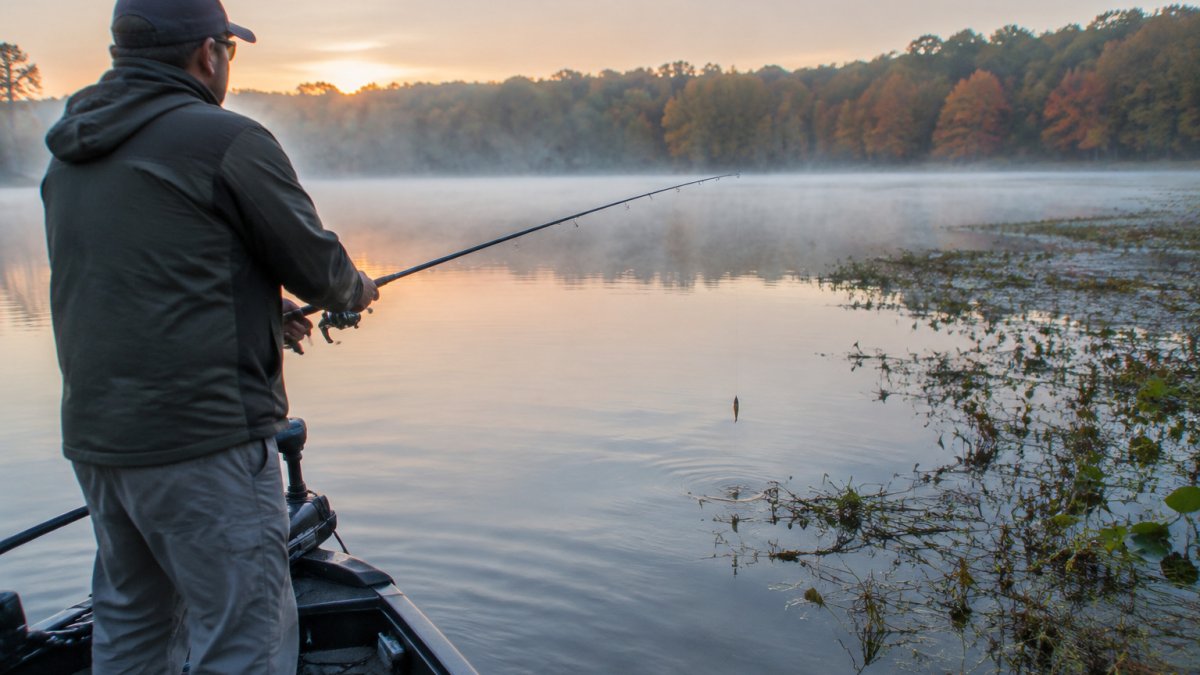
!An angler on a calm lake at dawn, casting a soft plastic swimbait near a weed edge while the water surface shows light mist
Why Fishing Gets Tough During Turnover and What Else Is Affected
Turnover shakes up the whole food chain. Cloudy water makes fish less willing to chase lures far, and oxygen shifts can push fish to suspend or bunch up. Baitfish scatter, which can make predators tough to pattern. Other species, like panfish and walleye, feel these changes too, not just bass.
Bass Fishing During Fall Turnover: Tactics That Work
Slow down and give fish a reason to commit. Use lures with strong vibration or flash so bass can find them in stained water. Swimbaits and creature baits both work well when you fish them near structure and cover. Keep your retrieve steady and deliberate, and always pay attention to the water temperature as you move around the lake.
Planning Your Next Trip Around the Turnover Window
Plan your trip around the signs above rather than the calendar. Check water temperature, watch clarity, and give yourself a few flexible days. Just Lures Fishing carries a range of swimbaits and creature baits, so you can shop Swimbaits and stock up before your next outing.
Frequently Asked Questions
How long does fall turnover last for fishing?
Fall turnover usually lasts a few days to a few weeks. The exact length depends on lake size, depth, and how much wind and cold weather the lake gets. Smaller, shallower lakes often mix faster, while large, deep reservoirs can take longer. Not every lake turns over every fall, so the timing can differ even between nearby waters. Watching water temperature from the surface to the bottom is the most reliable way to judge where your lake is in the process.
Where do bass go during fall turnover?
Bass often move toward available cover, structure, and areas where oxygen and temperature are more stable. Many anglers look for weed edges, submerged timber, and points near deeper water, since fish may relocate as the water column mixes. Because conditions shift daily during turnover, checking several spots and adjusting depth is usually more productive than staying on one location.
How do you catch bass during fall turnover?
Slow down and focus on fish that are feeding in predictable areas. Swimbaits, creature baits, and soft plastics worked slowly near cover can trigger strikes when bass are less aggressive. Pay attention to baitfish activity and adjust retrieve speed to match the water temperature. Experimenting with depth and lure color helps when fish are scattered across the lake.
